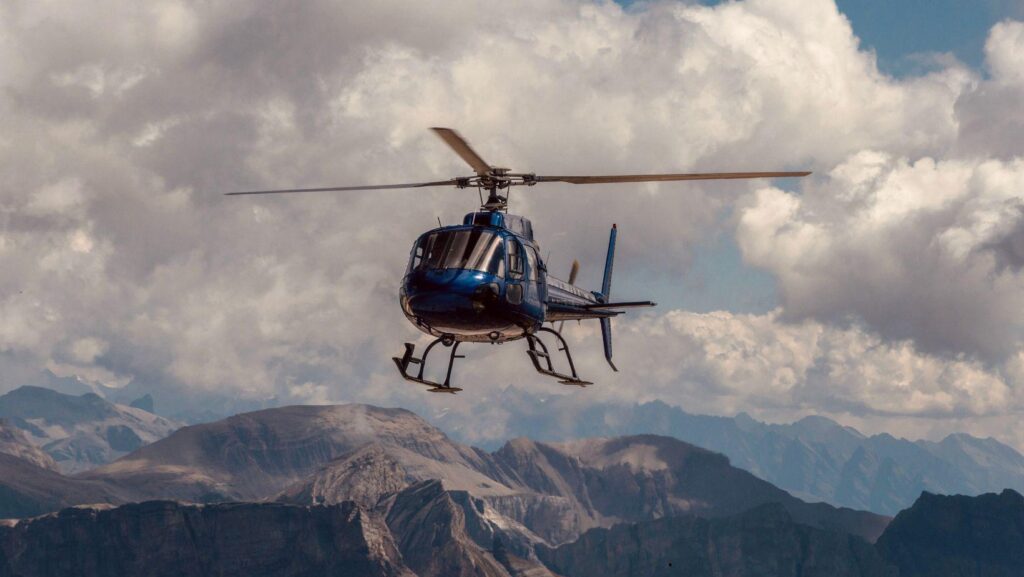
Himalayan Helicopter expertise matters more than the price alone. The two companies may offer the same route, while the real difference lies in how the tour is planned. It also depends on how route conditions and weather are assessed, and how passenger and baggage details are co-ordinated, and how clearly travellers are communicated with when things change. During a helicopter flight day, altitude, wind, visibility, fuel needs, aircraft performance, payload, and pilot judgement play a crucial role to find out weather a planned flight or landing is practical on a given day.
This is especially even more important in Lukla and Kala Patthar. Lukla shows why route checks, timing, and coordination matter when dynamic mountain weather upsets the tour. Similarly, Kala Patthar brings different challenges, where altitude, temperature, payload, fuel, and aircraft performance all become critical. Our highly respected pilot has stated, “The forecast is useful, but the mountain gives you the live update.” The difference is very important because you can’t entirely depend on the forecast to continue your helicopter tour.
For travelers, a helicopter is not just about booking a seat for majestic views. It lies in the planning, communication, judgment, and coordination behind the flight. We at Aero Connect Nepal approach this role as a booking and itinerary agent, focusing on transparent information, customer guidance, and clear communication rather than presenting ourselves as the helicopter operator.
Why Price Alone Is a Poor Way to Judge a Himalayan Helicopter Trip?
People often consider the low helicopter fare for the experience; however, they are often unaware of what they are purchasing. In the Himalayan adventure, the number shown on the page is not as important as the quality of planning, communication, and operational coordination. Travelers are also not aware of the differences between a booking agent and a helicopter operator.
A helicopter operator is responsible for conducting aircraft and flight operations, whereas a booking agent helps in arranging seats, coordinating itineraries, and communicating with customers. This means different companies may advertise similar helicopter experiences without operating the aircraft themselves. Aero Connect Nepal handles booking and itineraries, not helicopter operations, so its value is helping travelers understand and coordinate the trip.
What a Headline Price doesn’t tell you?
A headline price is a normal price in the case of normal tour days. However, in Nepal, helicopter tours may not be normal, so the headline price may not provide full clarity on different scenarios. Like what happens when a flight is delayed, whether passenger weight and baggage details are required, and how cancellations are handled. It may also leave out other important details about ground transfer, rescheduling, cancellations, and what is actually included in the package.
What Travelers Should Compare Instead
Before choosing the cheapest quote, travelers should ask:
- Is the total price and its inclusions clearly explained?
- Who operates the helicopter?
- Are passenger weight and baggage limits stated?
- What happens if the weather prevents the flight?
- How will delays or changes be communicated?
- Is the advertised landing subject to actual operating conditions?
Aero Connect Nepal aims to stand out as a reliable operator through visibility, trust, responsiveness, and accurate, helpful information. We would not provide our opinion just on the basis of the cheapest option.
What Makes Himalayan Helicopter Flying Different From Ordinary Scenic Aviation
Himalayan helicopter tour is quite different from the scenic flight of Nepal. This is because the environment can change within minutes over a short distance. In Nepal, pilots must take into consideration different factors like terrain, altitude, wind, temperature, clouds, visibility, and the performance of the helicopter. Our own interview with pilot Rabindra Prajapati proved that a helicopter tour is far from simple in terms of moving from one airport to another.
Here are a few factors that make a helicopter tour different from ordinary scenic aviation.
Mountain Weather
People often mistake mountain weather for the typical season where one type of weather remains for a few months, which is not the case. Furthermore, the weather in Kathmandu is not representative of the weather in Lukla or even the higher Everest region. Conditions can change within a valley along different intersections of the same route. According to our pilot, they assess current conditions at both Kathmandu and Lukla, along with route weather, forecasts and reports from other aircraft, rather than assuming that conditions at the departure point will remain unchanged.
Forecast is only part of the decision
Weather forecasts are part of the conditions for planning, but they are not the end all for making an exact decision. As Captain Rabindra Prajapati puts it, “In the Himalayas, the forecast is useful, but the mountain gives you the live update. Even after certain forecast pilots continue accessing different factors like visibility, wind, turbulence, cloud development, and the direction where these conditions are moving.
Terrain and Altitude Narrow the Operating Margin
Mountain terrain adds another layer of complexity. Narrow valleys, steep ridges, and confined landing areas leave less room to react when visibility or wind worsens, while higher altitude reduces helicopter performance. The pilot interview notes that high-altitude operations require constant attention to aircraft weight, fuel, temperature, wind, and available performance instead of relying on what the helicopter can carry at lower elevations.
Every helicopter flight is unique every day
A helicopter’s performance depends on the conditions it is flying in. Temperature, altitude, visibility, wind, fuel, and passenger weight an all affect how it performs on a flight. The payload planning is based on actual aircraft performance and takes into account altitude, temperature, pressure, wind, fuel, visibility, landing site, and aircraft weight, according to our pilot Rabindra Prajapati.
What Lukla Reveals About Timing, Logistics, and Judgment?
Lukla is not just a gateway to the Everest region; it is a unique place that shows why helicopter tours depend on logistics and judgment calls. Helicopters can be a practical option when scheduled fixed-wing services are disrupted due to unforeseen reasons. This is especially for tourists with limited time, but they still have to depend on visibility, weather, wind, aircraft availability, and other conditions. Choosing the right helicopter is not just about finding an aircraft and leaving as quickly as possible.
Lukla Is a Logistics Problem
Kathmandu to Lukla helicopter tour is not just a flight destination; it is also a huge logistics problem. For travelers on their route to the Everest region, a delay in Lukla can affect so much more than just the flight itself. Passenger availability, baggage, trekking schedules, accommodation, connecting flights, and the availability of a suitable helicopter all have to be coordinated. Hence, sometimes a helicopter tour can be a practical travel solution, not just a luxury. However, even for a helicopter tour, a suitable window for operations must exist before flight.
Open Lukla Airport is not a Solution
An open airport does not mean a helicopter can safely make the trip. The better question is whether the whole route and landing can be done safely. Pilots look at conditions at departure, along the route, and around Lukla itself, including visibility, clouds, wind, and other mountain conditions.
A mountain flight delay in Lukla can create a huge scheduling problem. A travel have to adjust several factors like trekking days, hotel booking, baggage arrangements, or even an international connection. Similarly, operators have to arrange for the next aircraft and a suitable weather window the for next operations.
What Kala Patthar Reveals About Altitude, Payload, and Performance
Everest Base Camp Helicopter Tour with Kala Patthar landing is one of the famous luxury experiences in Nepal. Kala Patthar sits at an altitude of 5,545 m, which makes helicopter landing a very different operation than an ordinary scenic flight. At this elevation, the aircraft has far less performance margin, and the difference between an overflight and an actual landing becomes important. Landing at such an elevation requires the pilot to make decisions on key factors like approach, landing area, wind, altitude, and available power. Our interview with Captain Rabindra Prajapati explains how a landing area that looks easy in a photograph does not show the wind, turbulence, or aircraft performance conditions on the day.
This is also the reason why there is no universal fixed number of passengers for Kala Patthar. The practical number of passengers can change on the basis of helicopter model, new or old, fuel load, passenger baggage weight, altitude, temperature, wind, visibility, aircraft performance, etc. The interview makes this point clearly: the same helicopter, pilot, and passengers can perform differently at altitude, so high-altitude payload calculations must be based on the actual conditions, not a fixed number promised in advance.
The reason for this difference is because of physics. As the elevation and temperature increase, the density altitude increases, and the performance of the helicopter decreases, which can reduce the necessary payload. Rabindra Prajapati describes the difference simply: “At sea level, the aircraft has one performance capability. At 5,000 or 6,000 metres, it is a completely different situation.” Another factor is fuel because it adds to aircraft weight. Enough fuel and approved reserves must be carried for the required tour. Hence, a Kala Patthar landing should not be treated as guaranteed on the day, because it was possible on the other day. It depends on the weather, wind, visibility, landing conditions, fuel, weight, and aircraft performance, all of which still must support the operation.
Why Expertise Matters More Than Low Pricing?
The expertise on the subject matters because Lukla and Kala Patthar involve very different operational challenges. A helicopter trip to Lukla depends on route conditions, weather, timing, and coordination with trekking schedules, while a Kala Patthar landing adds major altitude and aircraft-performance concerns. A generic “Everest helicopter” label does not explain these differences. Realistic planning should account for passenger weight, baggage, fuel, weather, timing, and the aircraft’s available performance on the day, rather than relying on a fixed itinerary or passenger configuration.
Communication is also important because mountain conditions can change after a booking is made. Travelers should receive clear information before departure, timely updates when conditions change, and simple explanations of alternatives, cancellation, and rescheduling. Most importantly, neither a booking agent nor an operator should encourage a flight just because a customer has already paid.
In mountain aviation, being willing to say “not today” when conditions are unsafe is part of responsible decision-making, not poor service. A lower quote may save money at first, but unclear communication or unrealistic expectations can cost travelers more through lost time, disrupted trekking plans, or difficult last-minute arrangements.
Why Aero Connect Nepal for safe Helicopter Tours?
Aero Connect Nepal is a booking agent and not a helicopter operator. It works as an itinerary agent, arranging seats on helicopters approved by CAAN-certified helicopter companies. This information is important so that the company can compile information on the needs and wants of travelers before, during, and even after their adventure. Rather than competing on the lowest fare, it focuses on trust, transparency, responsiveness, and expertise in Himalayan helicopter travel.
The approach of Aero Connect Nepal to providing information is also different. Rather than using hyped words like “experienced pilots” or “scenic views,” they provide necessary, to-the-point, and up-to-date information on specific and verifiable details such as flight duration, landing altitude, visible mountains, pricing, weather limitations, and cancellation arrangements. In a market where several agencies may book the same limited helicopter operators, specific information and honest expectations can be more useful than another promise of a “premium” experience.
FAQs
1. Why Does Weather Affect Everest Helicopter Tours So Much?
Mountain weather is extremely dynamic and can change quickly. The cloud, visibility, wind, and conditions along the route affect whether a helicopter can operate safely and securely. Pilots somewhat depend on forecasts but also assess current conditions and reports before reaching such high altitudes.
2. Is Kala Patthar Harder to Reach by Helicopter Than It Looks on a Tourist Itinerary?
Yes, because Kala Patthar’s high elevation adds aircraft-performance limits that do not apply to ordinary scenic flights. Passenger weight, baggage, fuel, weather, wind, visibility, and the landing area can all affect whether a landing is possible on a particular day.
Why Can’t Helicopter Operators Promise the Same Payload Every Day?
Aircraft performance changes with density altitude, temperature, wind, fuel load, and other conditions, so payload can vary from one flight to another. Passenger configuration should therefore be checked against the actual aircraft and conditions rather than treated as one fixed number.
What Should Travelers Ask Before Booking a Helicopter Trip in Nepal?
Travelers should ask who runs the aircraft, what passenger and baggage limits apply, whether the advertised landing depends on conditions, and what the total price includes. They should also check the weather cancellation policy, rescheduling options, and how same-day changes will be communicated.
Conclusion
In Nepal, the headline price of any tour only tells half of the story. Different factors like weather, altitude, payload, aircraft performance, route judgment, and communication can determine the actual experience. Lukla and Kala Patthar helicopter tour proves that why proper planning, transparent information, and an understanding that a safe tour must always be the top priority over low price or fixed schedule.
Planning a Lukla or Kala Patthar helicopter trip? Contact Aero Connect Nepal to plan your trip.