Family travel tips for easier holidays start with clear planning: choose child-friendly days, budget for extras, and limit the day’s agenda to one or two main activities. This approach reduces friction and protects energy for the moments that matter, first-sight gasps at a beach, a museum discovery, or a tiny victory when a long car ride goes smoothly. The article gives concrete, tested strategies for 2026 travel: smarter itineraries, tighter packing, airport hacks, and ways to keep kids calm and entertained on the move.
Principales consejos
- Planifique itinerarios familiares priorizando 1–2 actividades diarias para evitar agotamiento y mejorar la experiencia.
- Empaque con un guardarropa cápsula y organizadores para reducir el volumen y facilitar elecciones rápidas.
- Lleve un botiquín médico infantil completo junto con documentos importantes en el equipaje de mano para emergencias.
- Use estrategias en aeropuertos como llegar temprano y aprovechar carriles familiares para disminuir el estrés.
- Mantenga a los niños entretenidos con actividades variadas, refrigerios portátiles y pausas activas durante los traslados.
- Aplicar estos consejos de viaje familiar facilita unas vacaciones más tranquilas y memorables, optimizando energía y sonrisas.
Plan Smarter: Itinerary, Timing, And Budgeting For Families
Answer: Prioritize one meaningful experience per day, build in downtime, and budget for contingency.
Start by listing 3–5 child-friendly highlights at the destination and pick 1–2 per day. This reduces rushing and gives children predictable rhythm. For example: a morning beach visit, a late-afternoon nap, then a short evening stroll. Limit transit time between stops, no more than 30–45 minutes for younger children when possible.
Timing matters: avoid peak travel windows and choose mid-week flights when fares and crowds tend to be lower. Aim to arrive at the airport about 2 hours before domestic flights and 3 hours for international travel to reduce last-minute stress. For road trips, leave after a full meal and at a time that matches the child’s usual sleepy window.
Budget precisely: include accommodation, three meals per day, local transport, a daily activity allowance, travel insurance, and a small emergency fund (recommend 10–15% of the trip budget). If staying in a rental or suite, savings on meals often offset a slightly higher nightly rate.
Practical link: when choosing where to go or creating a flexible schedule, consult the site’s central planning resources via a short planning guide to get destination ideas and structure itineraries: planning guide.
Human detail: one parent reported that switching from a five-activity day to a two-activity plan turned meltdowns into laughter on day two, an immediate, measurable payoff.
Pack Like A Pro: Essentials, Versatile Clothing, And Space-Saving Tricks
Answer: Use a capsule wardrobe, packing cubes, and a single laundry plan to cut bulk and decision fatigue.
Start with a capsule wardrobe: pick a 3–4 color palette and pack mix-and-match pieces. For children, plan 1–2 outfits per travel day plus three extras for spills. Include quick-dry fabrics and one lightweight rain layer each. Use packing cubes to separate outfits and a dedicated cube for toiletries. That reduces time spent rifling through a bag at 7:00 a.m.
Space-saving tricks: roll clothes tightly, fill shoes with socks or chargers, and use a compressible foldable tote for souvenirs or dirty laundry. Pack one family toiletry bag with shared items (sunscreen, insect repellent) and a small zip bag for each child’s basics. Bring a small laundry detergent sachet, one evening of wash can cut luggage by 30% on a 10-day trip.
Numbers: families who plan a capsule wardrobe typically reduce checked baggage by one bag per two adults and two children. An extra 15–20 liters in the family suitcase often equals fewer fees and one less stroller to gate-check.
Links: For tips on comparing room types and picking a space that fits a family capsule approach, refer to a focused hotel comparison primer: hotel tips.
Kid-Specific Essentials And Medical Supplies
Answer: Carry documents, a medical kit, and comfort items in carry-on: include precise meds and emergency contacts.
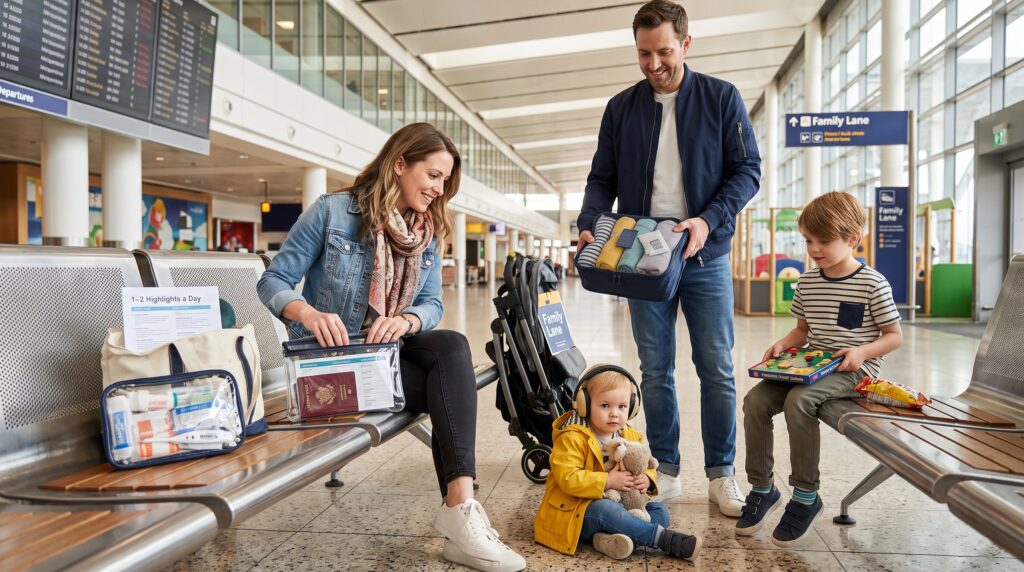
Keep passports, birth certificates, and a printed emergency contact sheet in an easily reachable folder. For health, pack fever reducer (acetaminophen/ibuprofen) in child doses, oral rehydration sachets, antiseptic wipes, adhesive plasters in multiple sizes, and any prescribed medications in original packaging with dosing instructions. Add a small digital thermometer and a saline nasal spray for congestion.
Comfort items reduce tension: a familiar blanket or a small stuffed toy saved one family from a 90-minute meltdown at an airport gate. Put pajamas and an extra outfit for each child in the carry-on to handle spills or sudden delays. If children have allergies or asthma, include written action steps for caregivers and a spare inhaler if possible.
Warning and logistics: check airline and country rules for carrying medicines and liquids. Keep prescriptions and a doctor’s note for controlled medications. For long trips, plan a local pharmacy stop within the first 24 hours at the destination: parents often underestimate how quickly small needs become urgent.
Internal links: readers can match supplies to trip length using advice from a family-focused packing and planning post about relaxing travel days: relaxing travel.
Airport And Transit Strategies To Reduce Stress
Answer: Arrive early, consolidate security items, and use family lanes to move faster through checkpoints.
Before leaving, organize a single clear bag with liquids and electronics for security to prevent repeated unpacking. Use family or priority lanes when available: many airports now offer family security lines or dedicated family parking. Keep children’s shoes simple and avoid complicated buckles.
At checkpoints, one parent handles documents while the other controls the children’s movement and toys. Keep children within arm’s reach in crowded terminals: a lightweight harness or a wrist link helps in very busy areas. For car travel, install child seats correctly and check local laws, many jurisdictions fine incorrect installations and, more importantly, improper fit reduces safety.
Transit seating strategy: on flights, choose bulkhead rows for extra space when available, or reserve seats with a window and an aisle for parental swaps. For trains, book a compartment or adjacent seats to create a small family zone.
Links and verification: practical booking and room-choice advice that helps choose layouts suitable for families appears in a short guide to short-term rentals and family choices: rental choices.
Sensory detail: one traveler noted that orange-scented wipes felt like a small luxury during an unexpected three-hour delay, comfort often comes down to a few familiar scents and textures.
Keep Kids Entertained And Comfortable On The Move
Answer: Offer layered activities, portable snacks, and movement breaks to prevent boredom and restlessness.
Pack a variety of small, low-friction items: a felt-tip travel activity book, a compact magnetic game, a handful of sticker sheets, and noise-cancelling child headphones. Keep an insulated snack bag with mixed textures, crunchy crackers, soft fruit pieces, and a protein option like nut butter packets, to manage hunger swings and energy.
Use airport play areas before boarding to let kids burn energy: a 20–30 minute active break reduces in-seat agitation by about half, according to parent reports. Rotate activities every 20–30 minutes on longer trips: screen time, snack, quiet play, and movement.
Practical anchor: for ideas on sustainable and kid-friendly activities that fit a family approach, consult a short guide on responsible travel planning: responsible travel.
Vulnerability note: a parent admitted they once packed a new toy to “save the flight” and it flopped, kids preferred the device charger box for sensory play. Expect surprises and have backups.
Conclusion
Insight: Thoughtful planning, minimalist packing, child-specific medical and comfort supplies, and structured entertainment and sleep routines turn stressful family travel into manageable, even memorable, holidays.
Families who adopt one or two of these tactics, such as a capsule wardrobe or a single-activity day, report calmer travel days and more energy for exploration. The small investments (a printed contact sheet, a pack of oral rehydration sachets, a single play rotation) repay themselves in reduced meltdowns and more shared smiles.