
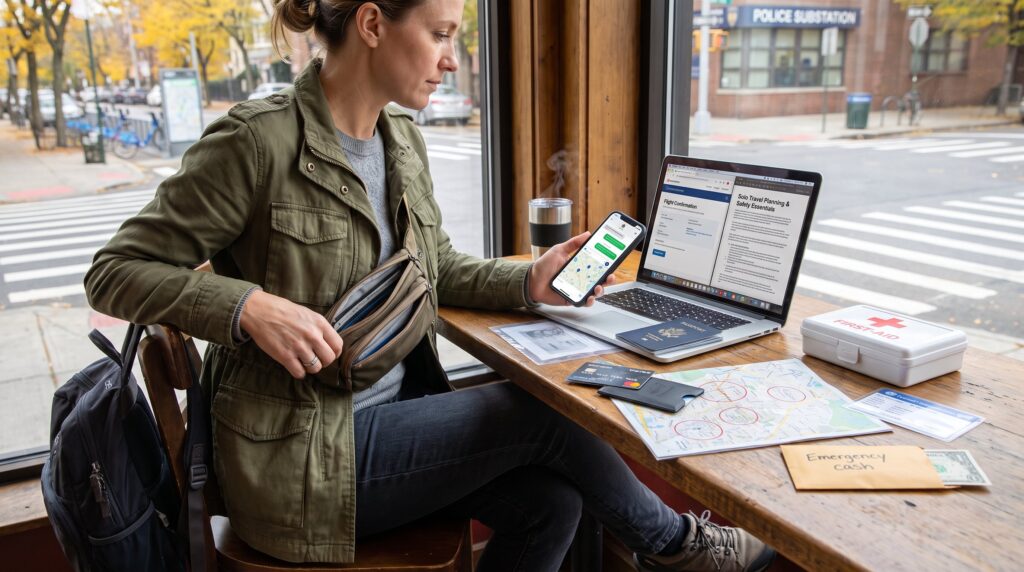
Solo Travel Planning and Safety Essentials gives readers direct, practical steps for planning independent trips and staying safe. Solo travel rewards autonomy and fast cultural learning, but it requires specific systems: reliable check‑ins, layered payment methods, and neighborhood‑level research. This guide sets expectations, occasional loneliness, extra planning, and offers clear actions to reduce petty crime, scams, and common travel hassles so travelers can focus on experiences, not constant worry.
Key Takeaways
- Solo travel boosts autonomy and cultural learning but requires risk management through systems like daily check-ins and layered payment methods.
- Neighborhood-level research is crucial; choose central, well-reviewed areas and avoid neighborhoods flagged for safety concerns to minimize travel risks.
- Prepare thoroughly before departure by organizing documents, splitting cash, enabling transaction alerts, and selecting accommodations with good reviews and emergency access.
- On the ground, practice situational awareness to prevent petty crime and scams by limiting alcohol, securing belongings, and using licensed transport services.
- Carry comprehensive travel insurance, know emergency contacts, and maintain an emergency cash reserve to reduce stress during crises.
- Adopt responsible travel habits by supporting local economies, following local customs, and using sustainable tour operators to enhance safety and goodwill.
Why Solo Travel Is Worth It: Benefits, Mindset, And Expectations
Fact: Solo travel increases autonomy and accelerates cultural learning. Solo travelers choose their schedule, stay longer in conversations with locals, and solve problems that build confidence.
Solo travel benefits include measurable skill gains: someone who spends two weeks alone in a foreign city often reports faster language progress and practical problem solving than a comparable group traveler. The correct mindset is risk management, not bravado, systems like daily check‑ins, duplicate documents, and exit plans reduce risk without eliminating spontaneity.
Expect some loneliness: that is normal and temporary. Plan brief social anchors, one meetup, a cooking class, or a local tour, to break long solo stretches. A candid mistake many make is underestimating the planning load: allocating three focused hours to logistics four days before departure dramatically lowers stress at arrival. For female travelers or those seeking gender‑specific tips, targeted resources such as the site’s piece on solo travel for women offer practical, experience‑based advice.
Choosing Destinations, Timing, And Risk Levels
Fact: Neighborhood data beats national safety scores for real travel risk. Country indices can hide dangerous pockets: city and neighborhood indicators show where to stay or avoid.
Practical steps: pick central, well‑reviewed areas and arrive during daylight when possible. Match destination risk to experience, begin with medium‑risk cities that have good healthcare access and strong tourist infrastructure. Experienced solo travelers may accept higher political instability if evacuation routes and embassy contacts are confirmed.
Use tools that map crime reports, and cross‑check recent traveler reviews for nighttime safety and transit details. For help finding reliable destination content and planning advice, the site’s hub on finding destination guides helps narrow choices quickly. Avoid neighborhoods flagged repeatedly in reviews, and build a short list of alternate neighborhoods before booking. When timing trips, favor shoulder seasons for lower crowds and safer daytime navigation while still enjoying good services.
Pre-Trip Planning Essentials
Fact: Preparation cuts most solo‑travel incidents to minor annoyances. Effective pre‑trip planning focuses on documents, money, tech, and backup plans.
Documents, Money Management, And Travel Tech
Carry primary documents physically and store encrypted digital copies. Leave one copy with a trusted contact and one with secure cloud storage. Use at least two bank cards on different networks and split cash into multiple locations, example: wallet, hidden pouch, and luggage (three points). Enable transaction alerts and set low daily limits on a backup travel card. Use a VPN on public Wi‑Fi and transaction alerts to catch fraud immediately.
Bookings, Accommodation Choices, And Backup Plans
Filter accommodations by high ratings and recent reviews, then check the map for nearby transit and emergency services. Share the chosen address and a rough itinerary with a trusted person. Keep a list of three alternate lodgings and two escape routes from the neighborhood. The site’s practical trip planning guide, practical advice on planning trips, offers checklist templates and timelines that reduce last‑minute errors. A common misstep is booking the cheapest place without verifying night access and neighborhood lighting, spend 10–15 extra minutes on map inspection to avoid that.
Safety Essentials On The Ground: Personal, Situational, And Transportation Safety
Fact: Most on‑trip incidents are petty crime, scams, or harassment: situational awareness prevents the majority.
On the ground, set clear personal rules: limit alcohol, follow local dress codes where relevant, and leave any situation that feels wrong immediately. In crowds, keep bags closed and phones out of sight: in markets, use a front‑worn crossbody bag with zippers. Learn common local scams, overcharging, staged distractions, and rehearse brief responses like “No, thank you” and walking away.
For transport, prefer licensed taxis or vetted ride‑hail services and avoid hitchhiking. Sit where you can exit easily and keep a basic route map open to verify the driver’s route. For longer journeys, choose daytime departures when possible and book reputable operators. The site’s safety article on on the road safety tips provides practical checks and red‑flag questions for drivers and operators.
Health, Insurance, And Emergency Prep For Solo Travelers
Fact: Carrying travel insurance and knowing emergency contacts reduces crisis stress by more than half.
Solo travelers should buy travel and health insurance that covers evacuation and 24/7 assistance: policy details matter, verify repatriation, adventure sport clauses, and hospital guarantees. Keep a printed summary of the policy and the insurer’s emergency number. Pack prescriptions in original containers and carry a duplicate script: store a scanned copy online. A small first‑aid kit (bandages, antiseptic wipes, pain relievers, antihistamine) fits in a daypack and solves most minor problems.
Prepare an emergency routine: identify the nearest hospital and embassy on arrival, program emergency numbers into the phone, and run a practiced check‑in schedule with one trusted contact. For deeper planning frameworks and reasons to prioritize insurance, consult the site’s guide on travel insurance reasons which lists numbered scenarios where coverage paid off. Finally, maintain a small emergency cash reserve separate from everyday money, €100 or equivalent often bridges immediate needs while cards are blocked.
Additional Practical Resources and Responsible Travel Notes
Fact: Responsible choices protect destinations and reduce traveler risk. Solo travelers who follow local rules and sustainable practices face fewer confrontations and improve local goodwill.
Choose lodging that supports local economies and check hotel comparison tips for transparency around fees and safety features. The site’s hotel comparison advice at tips for comparing hotels helps spot misleading photos and hidden costs. Balance convenience with responsibility, favor locally run tours and avoid operators without clear safety records. For broader guidance on responsible choices, the page on how to travel more responsibly lists concrete actions like water use, tipping norms, and wildlife interactions.
Also, the site’s main planning hub provides destination ideas and deeper planning guides, use the short planner in that resource to build itineraries that match risk tolerance and interests: planning hub.
Quick Practical Tips and Common Mistakes
Fact: Small routine habits prevent most travel problems.
Tip list: photograph luggage tags and passports, set daily check‑ins at predictable times, and keep an exit card with key phrases in the local language. Avoid common mistakes: relying on a single bank card, accepting unsolicited help with luggage, or sharing live location publicly.
A concrete example: one traveler lost access to banking after a card was skimmed: because they had a secondary card and €100 hidden cash, they reached the embassy and continued the trip with a single afternoon’s delay. That scenario shows how redundancy and small cash reserves save days of trouble. For hands‑on planning templates that reduce errors, the site’s travel preparation guide offers step‑by‑step preparation checklists and packing lists.