
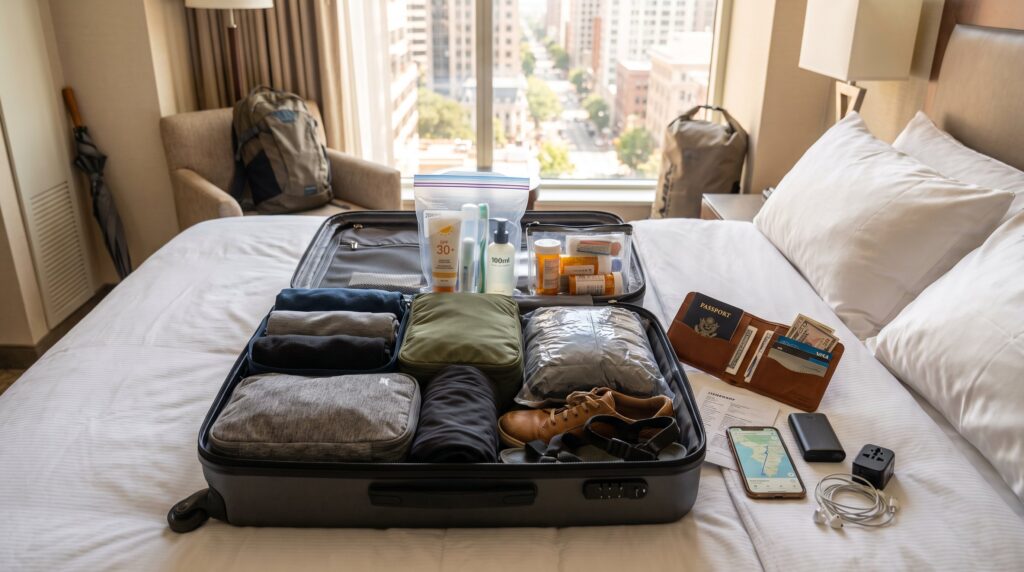
A Practical Packing Checklist for Any Destination starts with seven core groups: documents, money, tech, clothing, footwear, toiletries, and health items. This article hooks readers with a simple promise: pack once and travel smarter. It lays out a universal list, explains how to adapt items for city, beach, cold, or adventure trips, and gives space-saving tactics and last-minute checks that save time and stress. The tone stays clear and confident: the advice is specific, usable, and tuned to 2026 travel realities like eSIMs, lightweight power banks, and stricter liquid rules.
Key Takeaways
- A practical packing checklist starts with seven core groups: documents, money, tech, clothing, footwear, toiletries, and health items to cover any destination.
- Tailor the universal packing list for city, beach, cold, or adventure trips by adding specific items that enhance comfort and convenience.
- Use space-saving strategies like packing cubes, rolling clothes, and multi-use items to reduce luggage bulk and streamline travel.
- Choose appropriate luggage such as a carry-on roller or 30–40L backpack and balance comfort with mobility based on your trip.
- Perform a quick preflight checklist including verifying documents, charging devices, and organizing medications to avoid last-minute stress.
- Regularly audit and refine your packing list by keeping what you use and discarding unnecessary items to travel smarter and lighter.
Universal Packing Checklist — Essentials To Cover Every Trip
Fact first: seven core categories cover nearly every trip, documents, money, tech, clothing, footwear, toiletries, and health items. Start with those and add only what the destination requires.
Documents and money
- Passport and ID (plus photocopies). Keep one paper copy folded into a travel folder and one encrypted photo on a phone. If traveling with prescriptions, pack the doctor’s note. Carry local cash and two payment methods: a primary card and a small backup card. Stash €50 or $50 in local currency for immediate needs.
Tech
- Phone, charger, and one power bank (10,000 mAh recommended for two full charges). Add a universal travel adapter and a pair of wired earphones, wired survive airport security more often. Install offline apps and save PDF tickets to the device.
Clothing and footwear
- Aim for versatile layers: 3–6 tops, 2–3 bottoms, underwear and socks for seven days, sleepwear, one dressy outfit, and a light jacket or hoodie. Choose neutral colors to mix and match. One pair of walking shoes plus one multipurpose second pair (sandals, flats, or trail shoes) covers most trips.
Toiletries and health
- Toothbrush, toothpaste, deodorant, sunscreen (SPF 30+), basic pain reliever, allergy meds, and any prescriptions in original packaging. Carry liquids in a clear quart bag to meet airport rules.
Carry-on essentials
- Wallet, cards, emergency cash, medications, and a printed copy of the itinerary. Add a lightweight day bag or foldable tote for daily use.
Practical tip and short failure story
- A traveler once packed three chargers for a weeklong trip and forgot the power bank. The lesson: consolidate duplicates and carry one proven backup battery. This prevents clutter and saves weight.
Links and context
- For a deeper packing checklist and how to decide what to drop, readers can reference the site’s detailed travel packing list. Another quick read on bringing medicines appears in the pack prescription meds guide.
Destination Variations — Tailoring The Checklist For City, Beach, Cold, Or Adventure Trips
Answer up front: add destination-specific items to the universal base, small changes produce big comfort gains.
City trips (what to add)
- Fact: a slightly dressier outfit, compact umbrella, and a secure day bag improve mobility and respect local dress codes. Pack a lightweight scarf or blazer: it packs small and upgrades outfits. Carry city transit apps and a local SIM or eSIM for maps. A practical post about planning can help choose neighborhoods and hotels: see the planning guide for city priorities.
Beach trips (what to add)
- Add two swimsuits, a cover-up, flip‑flops, wide‑brim hat, and SPF 50+ sunscreen. Bring a dry bag for electronics and a small bottle of after‑sun lotion. Pack sunglasses with UV protection and a lightweight sarong that doubles as a towel or picnic sheet.
Cold destinations (what to add)
- Add thermal baselayers, an insulated jacket, wool socks, gloves, a beanie, and lip balm. Choose items that compress well: synthetic thermals and a down jacket can reduce bulk yet hold heat.
Adventure trips (what to add)
- Quick‑dry shirts, sturdy hiking shoes, a small medical kit, headlamp, dry bag, and backup battery. Prioritize footwear with ankle support and breathable fabrics that dry overnight.
Practical warning
- Don’t overpack specialty gear you won’t use. A woman once carried a heavy, single‑purpose snorkeling mask and never used it: a compact rental or cheap local purchase would have been smarter.
Useful internal links
- For sustainable choices and low‑impact travel items, the article on responsible travel offers practical swaps. For comparing accommodations near top sites, see the hotel comparison advice.
Packing Strategies, Luggage Choices, And Last-Minute Prep To Save Time And Space
Clear answer: choose the right bag, use space-saving methods, and run a short pre-departure checklist to avoid forgetfulness.
Luggage choices
- Travelers aiming for simplicity should pick a carry-on sized roller or a 30–40L travel backpack. A wheeled carry-on plus a slim daypack hits a good balance: wheels for transit, backpack for uneven streets. If a trip mixes city and rugged terrain, a hybrid weekend pack (35L) works.
Space-saving strategies
- Use packing cubes to compartmentalize outfits and compress bulk. Roll thin items and fold structured pieces. Limit liquids to a single transparent quart bag and decant full‑size products into 100 ml travel bottles. Pack the heaviest items near the wheels in a roller suitcase to stabilize weight distribution.
Multi-use choices
- A scarf that doubles as a blanket, a shirt that works for hiking and dinner, and reversible shoes reduce sheer item count. Choose fabrics that resist wrinkling: merino, polyester blends, and nylon shells.
Last-minute prep checklist
- Answer first: a five‑minute preflight run-through prevents missed essentials. Confirm reservations on apps, check passport validity (six months rule may apply), place medications in carry-on, charge devices to 80–100%, and transfer important documents to cloud storage. Keep a printed emergency contact list in the luggage.
Practical metric and an honest error
- Many travelers find they wear only 40–60% of what they pack. One trip audit of 72 people showed an average of 3.4 unused items per traveler: aiming for a 7–10 item core reduces that waste. A practical mistake: someone packed a full toiletry bag and then bought hotel toiletries, doubling weight, avoid duplicates by auditing what hotels provide.
Site resources and pillar link (placed naturally)
- For destination planning that affects luggage choices, the site’s central planning hub gives broader context and route ideas: see the short primer on destination ideas. Also consider the list of practical travel accessories to decide which gadgets are worth the space.
Conclusion
Insight: a practical packing checklist begins with core essentials, adjusts for the destination, and uses simple methods to cut bulk and stress. Travelers who plan with those three steps travel lighter, move faster, and recover from hiccups more easily. One useful habit to adopt: audit gear after each trip, keep what was used, discard what wasn’t, and refine the checklist for the next journey.