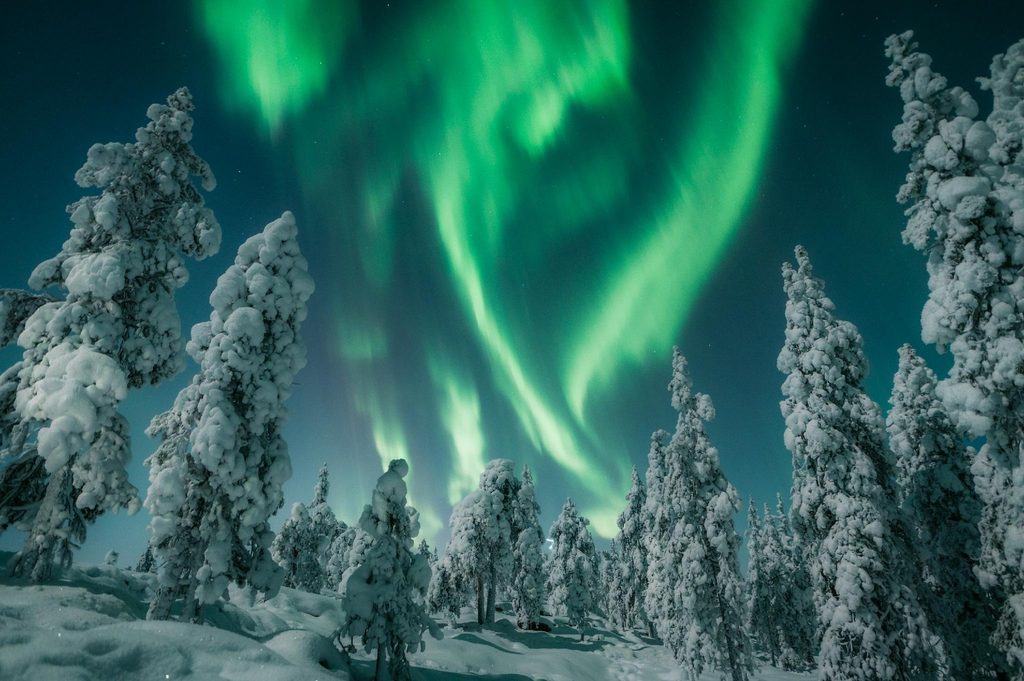
Ask most people what comes to mind when they think of Lapland, and the answer is Santa Claus, reindeer and a snow-covered Christmas card. Rovaniemi’s Santa Claus Village deserves its fame, but it is only one corner of a region that stretches across northern Finland, Sweden and Norway. Beyond the Arctic Circle line, you’ll find vast fell landscapes, living Sámi culture, quiet national parks and some of the best skies in Europe for the northern lights.Lapland is also much bigger than many first-time visitors expect. Distances are long, each area has its own character, and the best choice depends on the season and on what you want from the trip: comfort and family activities, silent wilderness, cultural depth or a chance to see the aurora at its best. Here are eight destinations that show a different side of the Arctic, followed by practical advice on when to go and how to plan.
1. Rovaniemi: The Gateway with More to Offer
Yes, it’s the home of Santa, and Rovaniemi is the most popular Lapland winter destination, but it is also a real Arctic city with a story of its own. It sits right on the Arctic Circle, where the Ounasjoki and Kemijoki rivers meet, and it was rebuilt after the Second World War with a town plan by the architect Alvar Aalto, often described as resembling a reindeer’s antlers.
Beyond Santa Claus Village, spend an afternoon at the Arktikum science museum to understand life at the top of the world, take a walk or a ski on Ounasvaara hill, or head out of town for a reindeer or husky safari. Restaurants here serve some of the best local food in Lapland, from reindeer and wild fish to cloudberry desserts. Because Rovaniemi sits in the south of Lapland, the northern lights appear less often than further north, so treat it as a comfortable starting point rather than your only stop. Its airport and night train from Helsinki make it the easiest place to begin a longer journey.
2. Levi: Lapland’s Lively Ski Resort
Levi is one of Finland’s best-known winter resorts, with a busy village, modern facilities, restaurants and plenty of family activities. It is a short transfer from Kittilä airport, which makes arrival simple even on a short break.
Beyond skiing and snowboarding, you can go snowmobiling, join husky and reindeer safaris, try ice karting or ride the gondola for wide views over the fells. Because Levi lies much further north than Rovaniemi, the chances of seeing the northern lights are noticeably better, and many hotels and cabins are built with aurora watching in mind. It’s an easy choice if you want variety and comfort in one place, especially for families or groups with different interests.
3. Ylläs: Fells, Forests and Space to Breathe
Ylläs is another leading ski area, made up of the villages of Äkäslompolo and Ylläsjärvi and set in a landscape of national parks and quiet forests. It feels calmer than Levi, which suits snowshoeing, cross-country skiing and evenings watching the sky from a frozen lake or a fell-top.
Winter days here are simple and rewarding: a morning on the slopes or ski tracks, an afternoon with a husky team or a snowmobile, and a sauna in the evening. In summer and autumn, the same fells become excellent hiking terrain, with marked trails, open views and rich autumn colours. Ylläs is a good fit for travellers who want an active holiday without the crowds of a larger resort.
4. Saariselkä and Urho Kekkonen National Park
Saariselkä is smaller and quieter than the big resorts, but its location is hard to beat. It lies in the far north of Finnish Lapland, not far from Ivalo airport, and works as the gateway to true wilderness. The neighbouring Urho Kekkonen National Park covers about 2,550 square kilometres of fells, mires and forest, and is dotted with wilderness huts for overnight treks on foot or skis. The park is also home to Korvatunturi, the fell that Finnish tradition names as Santa’s real home, so you can escape the crowds and still keep the Christmas link.
Day trips are easy from the village: the Rumakuru gorge trail and other marked routes start close by, while keen hikers can plan multi-day journeys deeper into the park. In winter, the area has a large network of cross-country ski tracks, and glass-roofed igloos and cabins make it possible to watch the aurora from your bed. Lemmenjoki National Park, a former gold-digging area, is also within reach for a longer stay.
5. Inari: The Heart of Sámi Culture
Inari sits on the shores of Lake Inari, one of the largest lakes in Finland, and it is the best place in Finnish Lapland to learn about the Sámi, the only recognised Indigenous people in the European Union. Several Sámi languages are spoken in the region, including Northern Sámi, Inari Sámi and Skolt Sámi.
The Sámi Museum Siida houses both the Sámi Museum and the Northern Lapland Nature Centre, with exhibitions on Sámi culture and the nature of the region. In summer, the museum’s open-air area adds historic buildings to the visit, and it is easy to spend half a day between the exhibitions and the lakeside. Nearby, the Pielpajärvi Wilderness Church, reached by a short forest walk, gives a quiet glimpse into the area’s past. In winter, the frozen lake, clear air and low light create ideal conditions for calm northern lights evenings.
6. Kilpisjärvi: Finland’s Far North-West
Finland’s highest fells rise around Kilpisjärvi, a small village where Finland, Sweden and Norway meet. It is one of the most dramatic places in the country, and one of the most remote. Saana Fell (1,029 m) towers over the village and is sacred to the Sámi, while the Three-Country Cairn marks the point where the three borders meet. Serious hikers can use Kilpisjärvi as the starting point for treks towards Halti and the Nordkalott trail.
Winter brings snowmobiling, snowshoeing, ice fishing and strong aurora chances, since the village is far from any light pollution. Lake Kilpisjärvi usually freezes in early November and thaws around the end of June. Summer offers the midnight sun from mid-May to late July, while autumn brings the colours of “ruska”, with mid-September the peak time for golden and crimson leaves. The road to Kilpisjärvi, Highway 21, is known as the Northern Lights Route, and the village can also be reached from Tromsø, making it a natural link between Finland and Norway.
7. Abisko: Swedish Lapland’s Sky Country
Across the border in Sweden, Abisko is well known among aurora watchers for its clear, dry skies, helped by the surrounding mountains that keep clouds away. Abisko National Park sits beside Lake Torneträsk, with mountain trails in summer and a strong reputation for stargazing in winter. The Kungsleden trail, one of Sweden’s most famous long-distance hikes, begins here.
In winter, many visitors head up to a mountain viewpoint above the village to watch the sky, while daytime activities include snowshoeing, skiing and dog sledding. The train line from Kiruna makes Abisko easy to reach without a car. It is remote and quiet, making it ideal for travellers who prefer nature over nightlife.
8. Tromsø: The Arctic City in Northern Norway
Strictly speaking Tromsø lies in Northern Norway rather than Lapland, but it belongs to the wider Arctic and Sámi region and works well as part of a multi-country journey. Fjords, mountains, cultural sights and winter activities are all within reach of the city centre. The Arctic Cathedral, the cable car up Mount Storsteinen and the local museums make good city stops, while the surrounding coast offers boat trips, wildlife watching and dramatic scenery.
Tromsø has a real city atmosphere, with cafés, restaurants and nightlife that contrast nicely with the silence of inland Lapland. It also pairs neatly with Kilpisjärvi and Abisko on a cross-border route, and travellers sometimes make the trip from Tromsø to Kilpisjärvi for a night of aurora watching when the coastal weather is cloudy.
When to Visit Lapland
Each season shows a different Lapland, so it helps to decide what matters most before choosing dates.
Winter (December to March) is the classic season, with snow-covered forests, husky and reindeer safaris, snowmobiling and skiing. Days are short, and in the far north the sun barely rises around midwinter, a period known as polar night. The northern lights are visible on clear nights, and the aurora season roughly runs from late summer through to early spring.
Spring (March to April) brings longer days, strong sunshine on snow and still-good aurora chances. It is a comfortable time for outdoor activities, with milder temperatures than midwinter.
Summer (June to August) means the midnight sun, when the sun stays above the horizon in the northernmost areas. It is the season for hiking, fishing, kayaking and lake swimming, and many visitors are surprised by how green and gentle the landscape looks.
Autumn (September to October) is the time of ruska, when the fells turn gold and red. Crowds are smaller, the air is crisp, and the first northern lights of the season start to appear.
Getting Around Lapland
Lapland’s main airports are Rovaniemi, Kittilä, Ivalo and Enontekiö, with additional connections through Tromsø in Norway and Kiruna in Sweden. Within Finland, buses and a night train from Helsinki serve Rovaniemi, while local transfers link most resorts with the nearest airport. For remote areas such as Kilpisjärvi, Inari or the national parks, hiring a car or booking private transfers gives far more freedom, though winter driving takes experience and confidence. If you plan to combine several destinations, allow generous travel time: distances of several hours between areas are normal.
Practical Tips for Your Trip
Dress in layers. Thermal underwear, a wool mid-layer and a windproof outer shell matter more than a single heavy coat, and warm boots make the biggest difference to comfort.
Give the northern lights time. The aurora depends on clear skies and solar activity, and no one can promise a sighting. Staying at least three or four nights in a northern location greatly improves your chances.
Book popular activities early. Husky safaris, snowmobile tours and glass-igloo stays fill up quickly in the peak season from December to March.
Respect local culture and nature. Ask before photographing Sámi people or reindeer herds, buy authentic handicrafts from local makers, and follow the rules in national parks, including where camping and fires are permitted.
Don’t try to see everything. Lapland rewards slow travel. Two or three well-chosen bases will usually give you a better trip than one stop each night.
How to Choose the Right Destination
Each of these places suits a different traveller. Rovaniemi and Levi are practical for families and first visits. Ylläs and Saariselkä suit those who want active days with a quieter feel. Inari, Kilpisjärvi and Abisko reward travellers who value culture, space and dark skies. Tromsø adds a lively city and a coastal landscape to a longer, cross-border itinerary.
A few combinations work especially well: Rovaniemi and Levi for a classic first trip, Saariselkä and Inari for a mix of wilderness and Sámi culture, or Kilpisjärvi, Abisko and Tromsø for a three-country Arctic route.