
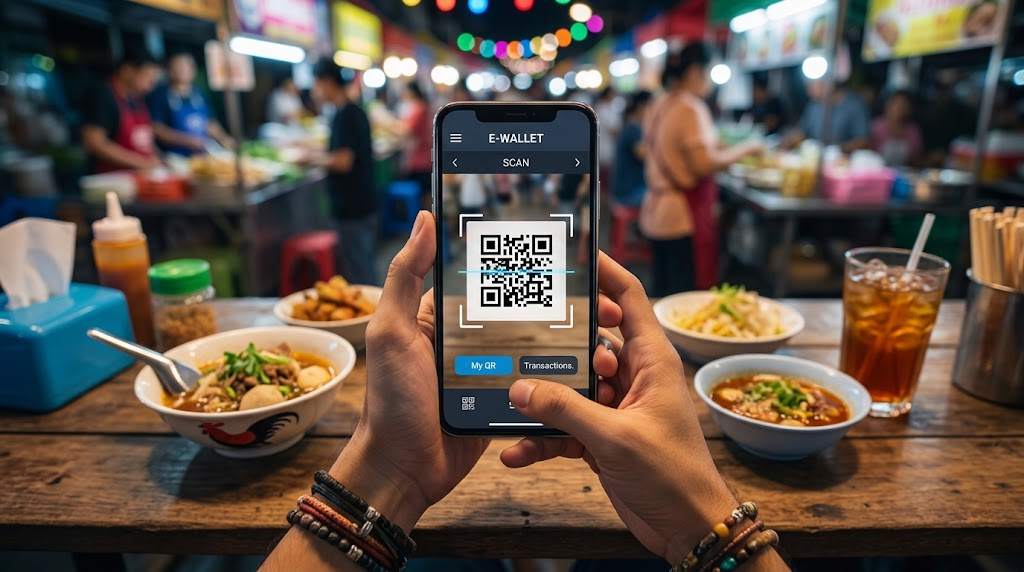
Over the past half-decade, Southeast Asia has undergone a staggering financial metamorphosis, leapfrogging traditional banking infrastructure to wholeheartedly embrace a mobile-first digital economy. This evolution is particularly visible in the Philippines, where digital payments now account for over 57% of all retail transaction volume, effectively smashing national economic targets years ahead of schedule. At the heart of this rapid transformation is the e-wallet — a versatile, smartphone-based financial tool that has successfully bridged the gap between the unbanked masses and the global digital marketplace.
As consumers migrate en masse to these agile financial technologies, industries built on immediate digital gratification are reaping the rewards. For instance, the integration of these fast payment systems makes claiming an online casino free 100 no deposit bonus incredibly smooth, fundamentally changing how consumers interact with digital leisure platforms. By eliminating the cumbersome friction traditionally associated with legacy banking and over-the-counter cash deposits, e-wallets have transitioned from being simple digital piggy banks to serving as the central operating system for everyday commerce, entertainment, and lifestyle management in the region.
The Ascendancy of Mobile Super-Apps
To fully grasp the magnitude of the e-wallet revolution in Southeast Asia, one must look at the meteoric rise of platform giants like GCash and Maya. These applications have fundamentally rewritten the rules of consumer finance. GCash, the undisputed market leader in the Philippines, now boasts a staggering user base of over 94 million registered individuals. This figure captures the vast majority of the adult population and connects them to an ever-expanding network of over 6 million active merchants. By penetrating deep into both urban commercial centers and rural provinces, GCash has become the default financial language for everything from corner-store QR code payments to corporate salary disbursements.
Meanwhile, Maya has carved out a formidable and highly lucrative position as the leading digital bank-wallet hybrid. While operating with a smaller but fiercely active user base of roughly 50 million, Maya has successfully prioritized financial depth. By securing a coveted digital banking license, the platform is aggressively driving user engagement through high-yield savings accounts and data-driven micro-lending. Maya’s powerful integration with the Visa network has also established it as a powerhouse for merchant transaction volume across the country.
Together, these platforms are doing much more than facilitating simple peer-to-peer transfers; they are building comprehensive digital ecosystems. Users can now invest in stocks, purchase life insurance, pay utility bills, and access revolving credit lines without ever stepping foot inside a traditional brick-and-mortar bank branch. This seamless consolidation of services into a single, intuitive interface is the defining characteristic of the new Southeast Asian digital economy.
Frictionless Onboarding in Digital Entertainment
The ripple effects of this financial technology boom are felt most acutely in the digital entertainment and iGaming sectors. Historically, the primary bottleneck for digital leisure platforms operating in Southeast Asia was the payment gateway. In a region historically characterized by low credit card penetration and a heavy reliance on cash-on-delivery, converting a casual digital browser into a paying, active user was a significant uphill battle. Consumers were often forced to navigate slow over-the-counter cash deposits or complex, multi-day wire transfers just to fund a gaming account or subscribe to a premium streaming service.
The widespread adoption of e-wallets has completely eradicated this barrier to entry. Today, funding a digital account or withdrawing winnings is accomplished with a quick biometric scan and a single screen tap. This frictionless onboarding is paramount for the iGaming industry, where user retention is heavily reliant on instant gratification and seamless user experiences. When a player registers on a modern platform, the ability to instantly link their e-wallet completely circumvents the notorious “checkout anxiety” that plagues traditional digital commerce.
Furthermore, this financial integration allows digital platforms to facilitate micro-transactions efficiently and profitably. Because e-wallets operate with significantly lower overhead processing costs than traditional credit card networks, digital platforms can afford to process smaller, high-frequency transactions. This micro-economy fuels the daily active usage of entertainment portals, allowing them to offer localized, bite-sized purchasing options that perfectly align with the spending habits of the modern Southeast Asian consumer class.
Security, Verification, and the New Baseline of Trust
Beyond sheer convenience and transactional speed, the integration of e-wallets has fundamentally altered the psychology of digital trust. In the early days of the internet economy, consumers were rightfully hesitant to share sensitive financial data with offshore entertainment platforms or unfamiliar digital storefronts. Today, e-wallets act as an impenetrable, trusted intermediary. Because platforms like GCash and Maya utilize stringent Know Your Customer (KYC) protocols, biometric authentication, and tokenized transactions, the consumer never has to expose their actual bank account details to a third-party merchant.
This inherent security structure provides a massive halo effect to the digital platforms that integrate them. Seeing a familiar e-wallet logo on a checkout page instantly validates the merchant’s legitimacy in the eyes of the consumer. This is especially true in highly regulated and scrutinized industries like online gaming and sports betting.
Astra Ramos, editor in chief at online-casino.ph, highlights this crucial shift in consumer psychology: “The rapid adoption of mobile wallets has fundamentally reshaped player expectations. It’s no longer just about the games or the platform’s visual interface; it’s about the financial user experience. E-wallets have turned what used to be a cumbersome, multi-day withdrawal process into a seamless, real-time transaction, and that instantaneous reliability is now the absolute baseline for trust.”
When platforms actively respect the user’s time and digital security by offering localized, instantly familiar payment rails, they secure a level of brand loyalty and consumer confidence that simply cannot be bought with traditional marketing campaigns.
Driving Regional Financial Inclusion
It is also essential to recognize the profound, long-term socioeconomic impact of the e-wallet boom. Before the rise of these mobile platforms, millions of Southeast Asians were essentially financially invisible — unable to build a verified credit history, access fair loan rates, or participate fully in the global digital economy. E-wallets have democratized financial access by utilizing alternative data for credit scoring. Every utility bill paid on time, every QR code scanned at a local market, and every digital entertainment purchase made contributes to a user’s digital footprint, allowing AI-driven algorithms to accurately underwrite micro-loans in a matter of seconds.
By pulling the historically unbanked population into the formal financial sector, e-wallets are stimulating domestic consumption and empowering an entirely new generation of digital entrepreneurs. Small-scale merchants, freelance digital creators, and independent streamers can now effortlessly monetize their services and receive payments in real-time, completely bypassing the predatory fees associated with legacy remittance networks.
The Future: A Borderless ASEAN Economy
As we look to the horizon, the next major frontier for Southeast Asian e-wallets is seamless cross-border interoperability. Initiatives heavily driven by regional central banks are already laying the essential groundwork for a unified digital payment network across the entire ASEAN bloc. Soon, a consumer living in Manila will be able to seamlessly scan a merchant’s QR code in Bangkok or Jakarta using their local e-wallet app, with the complex foreign exchange and settlement processes handled instantaneously in the background.
The digital economy of Southeast Asia is no longer merely an “emerging market” trend; it is a fully realized, technologically advanced financial ecosystem. Powered by the unrivaled speed, security, and accessibility of mobile wallets, the region has established a new global standard for digital commerce. For modern businesses looking to capture the attention and loyalty of this vibrant consumer base, deep integration with these financial super-apps is no longer just a strategic advantage — it is an absolute necessity for survival.