Entering the Arab world—whether for work, travel, or personal relationships—means stepping into cultures known for strong traditions, warm hospitality, and close social ties. Although the region includes more than 20 countries, many social values remain shared across them.
Understanding Arab social etiquette does not require memorizing strict rules. It involves recognizing the values that guide daily interactions. At the core of these values are respect, honor, and community. When you approach social situations with awareness and sensitivity, you avoid misunderstandings and build more genuine, welcoming connections.
Respect, or ihtiram, is highly important. People show it to elders, hosts, religious practices, and social roles. Closely linked to this is sharaf, which relates to personal and family dignity. Because actions often reflect on the family, polite and thoughtful behavior matters. Community also comes before the individual. Family and social bonds shape daily life and underpin Arab hospitality.
Success in social interactions comes from sincere effort, not perfection. Even small gestures matter. A genuine expression of gratitude, for example, carries strong meaning. Knowing how to say thank you very much in Arabic (shukran jazeelan) can immediately show respect for both the language and the culture.
Understanding Cultural Foundations: Respect, Honor, and Community
To understand Arab social etiquette, you need to understand the values behind it.
These values shape greetings, conversations, and daily behavior.
Respect (Ihtiram)
Respect applies to people, traditions, and spaces. It includes using proper titles, speaking politely, and showing consideration in public settings. Elders usually lead conversations and decisions, and allowing them that space shows good manners. Smaller details also matter. For example, a visitor should avoid pointing their soles at others, and they should use a calm, respectful tone.
Honor (Sharaf and Karama)
Honor relates to personal and family dignity. Public criticism, confrontation, or embarrassment is avoided, as it can damage trust. If disagreements happen, they are handled gently and often in private. Complimenting someone’s hospitality or family is a common and respectful way to show appreciation.
Community (Al-Mujtama)
People see themselves as part of a larger family and social network. Decisions often consider how they affect others, not just the individual. This explains why hospitality feels so important. Guests are treated as a responsibility and an honor. Time also feels more flexible, with relationships valued more than strict schedules.
Greetings and First Impressions
First meetings matter, and greetings are rarely rushed.
Common Customs
Handshakes are common, especially between men, and may last longer than expected. Between men and women, a handshake usually happens only if the woman initiates it. A respectful alternative is a slight nod with the hand over the heart. The standard greeting is As-salamu alaykum, with the reply Wa alaykum as-salam. Always use your right hand for greetings and offering items.
Social Formalities
People often ask about your health, family, or travel. These questions show genuine care, not formality. Take time to respond before moving to business topics. Using titles remains important unless you are invited to do otherwise.
Communication Styles and Social Interaction
Communication in Arab cultures focuses strongly on relationships and context.
Indirectness and Harmony
People often avoid direct refusal to protect harmony. A “yes” may signal politeness rather than agreement. Phrases like insha’Allah may gently suggest uncertainty. Pay attention to tone, pauses, and body language.
Emotion and Expression
Expressive speech shows interest and sincerity. Warm language, compliments, and storytelling are common. Interruptions may happen and usually signal engagement, though guests should stay more reserved.
Building Rapport
Trust comes before business. Sharing coffee or a meal builds the foundation for any professional or personal relationship. Showing interest in the Arabic language also helps. Even knowing a few common arabic verbs, such as “to meet,” “to speak,” or “to understand,” signals genuine effort and respect.
Hospitality and Guest Etiquette
Hospitality is a core cultural value and a source of pride.
What to Expect
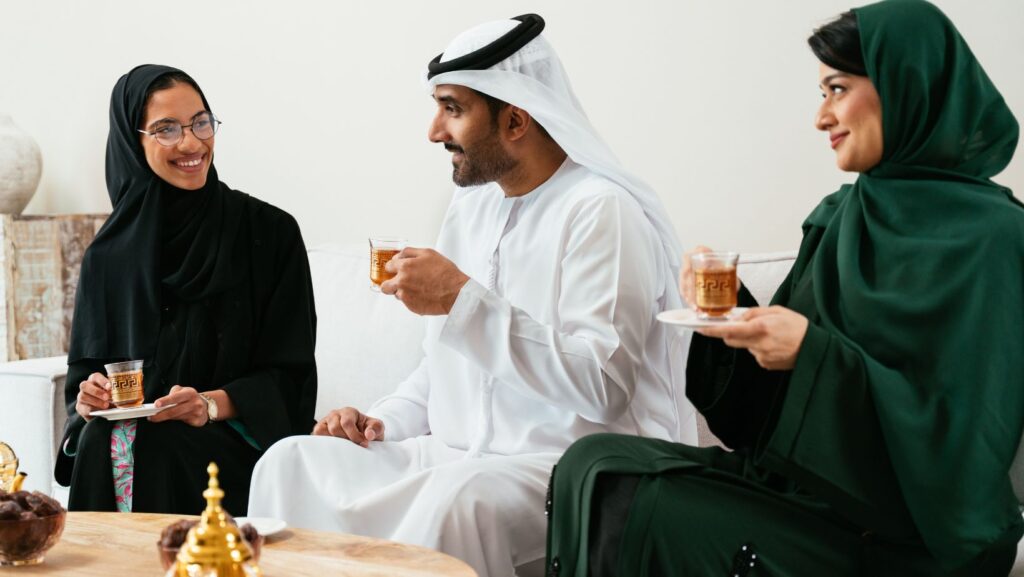
An invitation to someone’s home reflects respect. Guests receive warm welcomes, the best seating, and constant offers of food and drink. Accepting at least a small amount shows appreciation.
Gift-Giving
Bringing a small gift is polite. Chocolates, pastries, or items from your home country work well. Offer gifts with your right hand or both hands. Hosts may not open gifts immediately, which reflects modesty, not indifference.
Dining Etiquette
Meals bring people together. Wait for seating instructions. Hosts often encourage guests to eat more; accepting seconds is polite. Use your right hand, especially in traditional settings. Leaving a small amount of food shows you are satisfied. Meals usually begin with Bismillah.
Dress Code and Modesty Norms
Modest dress shows cultural awareness and respect.
General Guidelines
Clothing should be loose and cover the shoulders and knees. Women typically do not need a headscarf unless entering a mosque, but carrying one is advisable. Dress standards tend to be more conservative in Gulf countries.
Context Matters
Business settings expect formal, conservative attire. Beachwear stays appropriate only at beaches or pools. When unsure, choose more coverage.
Gender Roles and Social Boundaries
Gender interactions follow traditional norms that vary by location.
General Practices
In more conservative settings, men and women may socialize separately. Physical contact between unrelated men and women remains limited. Observing how locals interact offers the best guidance.
As a Visitor
Visitors often receive understanding, but respect remains essential. Foreign men should avoid initiating contact with women unless clearly invited. Politeness, patience, and awareness go a long way.
Final Thoughts
Social etiquette in the Arab world centers on respect, relationships, and care for others. You do not need perfection. Genuine effort, patience, and kindness matter most. When you prioritize people over schedules and show cultural awareness, you will experience hospitality and warmth that leave a lasting impression.