
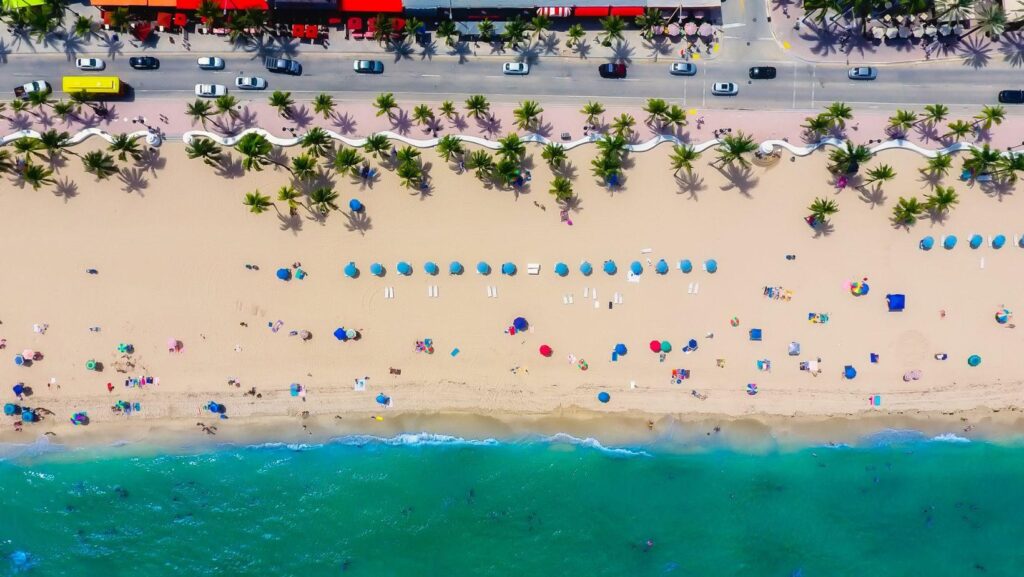
Fort Myers doesn’t try to be Miami, and that’s exactly the point. Tucked along the Caloosahatchee River in Southwest Florida, it’s a town of banyan trees, barrier islands, and a slower pace that’s made it a favorite winter escape for snowbirds and a genuine hometown for the people who live there year-round. Whether you’re planning a weekend trip or a longer stay, here’s where to spend your time.
A Practical Note Before You Hit the Road
Fort Myers is spread out, and a car is close to essential. Public transit exists but won’t get you to Sanibel, Captiva, or the state parks efficiently. Southwest Florida International Airport (RSW) is about 20 minutes from downtown and serves as the main gateway for visitors flying in.
Southwest Florida’s roads get busy fast once snowbird season picks up, particularly along US-41 and San Carlos Boulevard heading toward the beaches. More traffic means more chances for a split-second mistake to turn into a crash, so it pays to build in extra time, keep a safe following distance, and stay alert around causeways and bridge approaches where merging traffic and distracted sightseeing tend to collide.
It’s also worth double-checking your auto insurance before you drive. Florida requires at least $10,000 in PIP and $10,000 in Property Damage Liability coverage, and if another driver is uninsured or your own coverage has lapsed, sorting out who pays for damages and medical care gets complicated fast.
Start Downtown in the River District
Fort Myers’ historic downtown, known locally as the River District, is a good first stop. Restored early-1900s buildings now hold local restaurants, art galleries, and live-music venues along First Street, and the riverfront itself makes for an easy evening stroll once the Florida heat backs off. On the first Friday of every month, Art Walk turns the district into an open-air gallery, with local vendors and musicians filling the sidewalks.
Walk Through Thomas Edison’s Winter Retreat
A few minutes from downtown, the Edison and Ford Winter Estates on McGregor Boulevard preserve the adjoining winter homes of Thomas Edison and Henry Ford. Edison bought his property in 1885 and spent decades experimenting in the on-site botanical gardens and laboratory, much of which is still intact. The banyan tree on the grounds, planted in 1925, has grown into one of the largest in the continental United States. It’s a rare chance to see where two of the most influential inventors of the last century actually lived and worked, not just a plaque commemorating it.
Slow Down on Sanibel and Captiva
No Fort Myers trip is complete without a detour to Sanibel and Captiva Islands, connected to the mainland by a causeway. Sanibel is known worldwide among shell collectors. The island’s east-west orientation gives it an unusually generous supply of shells washing ashore, and locals joke about the “Sanibel Stoop” from all the bending over. The J.N. “Ding” Darling National Wildlife Refuge on the island protects thousands of acres of mangrove forest and is one of the best spots in the state for spotting roseate spoonbills, ospreys, and alligators from the safety of a boardwalk or a slow-moving car along Wildlife Drive. Captiva, just north, has a smaller, quieter beach scene and some of the best sunset views on the Gulf side.
Get Close to Manatees at Manatee Park
If you’re visiting between November and March, Manatee Park off Highway 80 is worth the stop. Manatees gather in the warm water discharge canal next to the Florida Power & Light plant during cold snaps, and the park has viewing platforms right at the water’s edge. It’s free to enter, and it’s one of the more reliable places in the state to see manatees without a boat.
Find Some Shade at Six Mile Cypress Slough Preserve
For a break from the beach, the Six Mile Cypress Slough Preserve offers a 1.2-mile boardwalk winding through a cypress wetland just outside the city. It’s an easy, flat walk, shaded most of the way, and a good option for spotting river otters, wading birds, and the occasional bobcat if you’re patient and quiet.
Head to the Coast: Fort Myers Beach and Lovers Key
Fort Myers Beach, on Estero Island, has been rebuilding steadily since Hurricane Ian in 2022, and the community’s resilience has become part of its story. Some landmarks are still under reconstruction, so it’s worth checking current conditions before you go, but the beach itself remains a draw, with soft white sand and some of the area’s best sunset viewing. A little further south, Lovers Key State Park offers a quieter alternative, with kayak rentals, dolphin sightings, and boardwalk trails through the mangroves.
Fort Myers rewards travelers who slow down. Between the wildlife refuges, the historic estates, and two very different barrier islands within a short drive of each other, it’s an easy place to fill a few days without ever feeling rushed.