
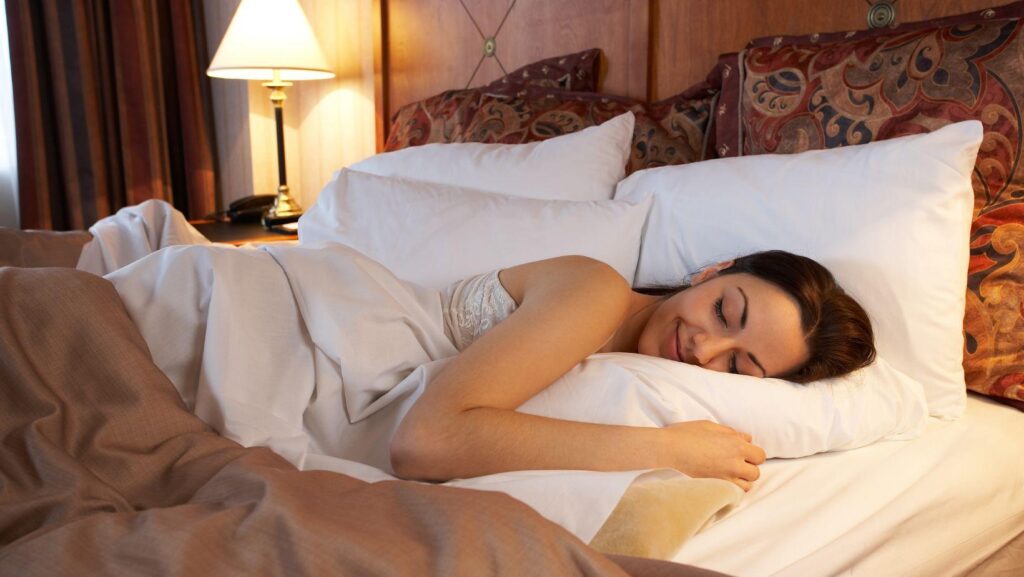
Light sleepers know the hotel routine well. The room looks lovely, the bed is enormous, and then at 2am the lift pings, the corridor light glows under the door, the air conditioning clicks on and off, and the pillow feels like a folded towel. By the time the alarm goes, you’ve had three hours of proper sleep and a full day ahead. It doesn’t have to go that way. With some planning before you book and a few habits once you arrive, most light sleepers can get a decent night almost anywhere.
Why Hotel Rooms Are Harder Work For Light Sleepers
Sleep researchers have a name for the poor first night in a new place. It’s called the first night effect, and studies using brain imaging have found that one hemisphere stays more alert than the other when we sleep somewhere unfamiliar. Your brain is, in effect, keeping watch. Everyone experiences this to some degree, but light sleepers feel it more sharply because they’re already tuned to small changes in sound, light and temperature.
Add to that the specific problems of hotels. Rooms are often set warmer than a bedroom at home, mattresses are chosen to suit the widest range of guests and tend to be firmer than many people like, pillows are frequently synthetic and too high, and there’s noise from every direction. None of these is a disaster on its own. Together they explain why so many people arrive at breakfast looking worn.
What To Check Before You Book
A few minutes of reading saves a lot of trouble. Look through recent reviews for mentions of noise, thin walls, street traffic or nightclubs nearby. Check whether the hotel offers a quiet room or a higher floor on request, and ask for one when you book. Rooms away from the lift, the ice machine and the stairwell are almost always calmer.
If the hotel lists its bedding or mattress brand, that’s useful information. If it doesn’t, a quick message asking whether they have alternative pillows available will tell you how much thought they’ve given to sleep. Some hotels keep a pillow menu, and it’s worth knowing before you arrive.
What To Pack
A short list of small items covers most of the common problems:
The First Hour In The Room
Set the room up for sleep as soon as you arrive, when you’ve got the energy. Turn the temperature down to somewhere between 16 and 19 degrees, which is the range most people sleep best in. Unplug or cover any lights on the television, the phone and the alarm clock. Draw the curtains fully and check for gaps. Put the do not disturb sign out so housekeeping doesn’t knock in the morning.
Then deal with the bed. If the pillows are too high, use one and put the other in the wardrobe. If they’re too soft, fold a towel underneath. If the duvet is too heavy for the room temperature, take off the top sheet and sleep under the cover alone. Ten minutes of adjusting now means you’re not wrestling with it at midnight.
Keeping Your Routine Where You Can
Travel disrupts sleep partly because it disrupts the cues your body relies on. Keep as many of those as you can. Eat at roughly your usual time, avoid a heavy meal or alcohol late in the evening, and stop working at least an hour before bed even if the day’s been long. If you read or stretch before sleeping at home, do the same in the hotel. The body notices familiar patterns even in an unfamiliar room.
If you wake in the night, resist the urge to check the time or the phone. Both make it harder to drift back off. Keep the lights low if you need the bathroom, and go back to bed without looking at a screen.
When You Get Home
One of the odd upsides of a bad hotel bed is that it tells you something about your own. If you slept badly because the mattress was too firm, too hot or too bouncy when the person next to you turned over, you now know exactly what to look for at home. Most people who describe themselves as light sleepers find they do best on hybrid mattresses that pair springs with a cushioning foam layer, since the springs let air move and reduce the sense of being sunk into the bed, while the foam softens the surface and helps absorb movement. Simba’s Hybrid® range, for example, uses titanium alloy microsprings with a perforated Simbatex® foam layer for exactly this balance, and the higher models add cooling layers for people who overheat.
Whatever you choose, the aim is the same. A bed at home that suits the way you sleep gives you a baseline of good nights, and that makes the occasional bad one in a hotel far easier to absorb.