
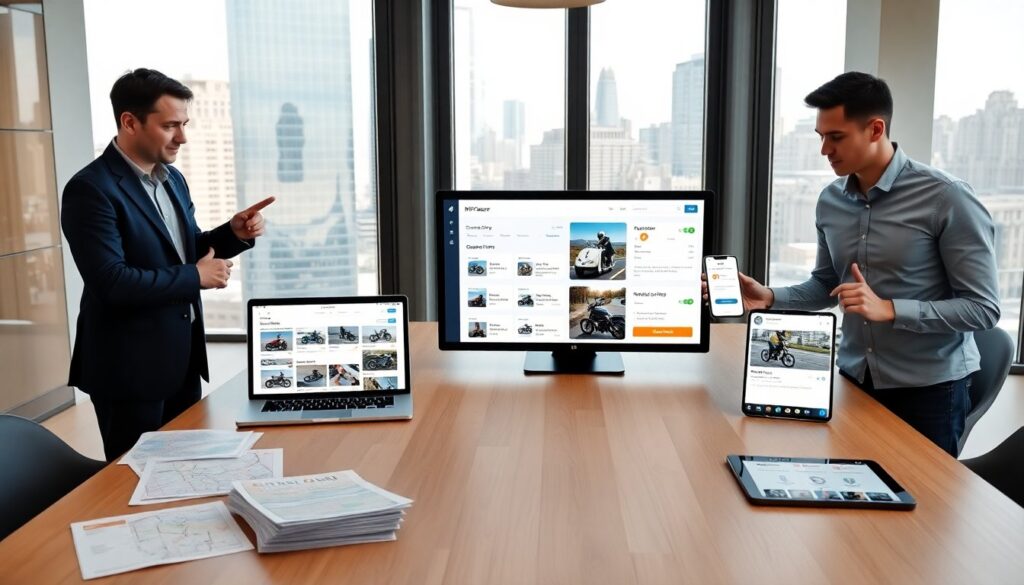
motorcycle charter app mfvpacer helps teams test demand and ship a focused product fast. It targets riders who want curated trips and operators who want predictable bookings. The introduction sets the goal: validate product-market fit, reduce operator friction, and deliver a simple rider booking flow. This guide explains what MFVPacer solves, which features to build first, and how to launch with growth plans.
Key Takeaways
- The motorcycle charter app mfvpacer targets riders seeking curated trips and operators wanting predictable bookings by addressing supply-demand gaps in guided rides and bike rentals.
- MFVPacer’s MVP focuses on essential features like filtered search, operator dashboard, booking and payments, rider verification, and trust signals to validate product-market fit quickly.
- The app reduces friction by centralizing bookings, offering in-app chat and notifications, and standardizing bike profiles and skills to build trust between riders and operators.
- MFVPacer launches with a city-focused pilot involving local operators, using paid ads, partnerships, and community events to drive early adoption and measure key metrics like booking conversion and retention.
- The platform monetizes through flat booking fees and premium subscriptions offering advanced operator tools, supporting growth with scalable tech stack components like React, Node.js, and Stripe.
- Growth strategies include leveraging influencer partnerships, rider referrals, content marketing, and gradual city expansions with automated onboarding and API integrations for scaling.
What MFVPacer Solves: Market Opportunity And User Problems
The motorcycle charter app mfvpacer addresses gaps in supply and demand for guided rides and bike rentals. Riders want easy discovery, clear pricing, and trusted operators. Operators want steady bookings, simple fleet management, and low commission fees. Urban riders book last minute. Touring riders plan weeks ahead. MFVPacer unites those timelines with flexible slots and waitlists.
The app reduces friction for three user groups. Riders get filtered searches, vetted operator ratings, and in-app waivers. Operators get a lightweight dashboard, calendar sync, and automated receipts. The app cuts phone calls and email by centralizing bookings. It cuts no-shows with pre-paid deposits and reminders.
Market data supports early focus. Small tour operators often lack booking tech. Independent guides list rides on social media. They miss customers who search on mobile marketplaces. The motorcycle charter app mfvpacer fills this gap by offering a marketplace built for bikes rather than general tours. It targets town-to-town tours, single-day escapes, and multi-day charters. That focus helps the product stand out and match rider intent with operator capacity.
The app also solves trust issues. Riders worry about bike condition and insurance. Operators worry about rider skill and liability. MFVPacer standardizes bike profiles, skill-level tags, and insurance checklists. The app prompts operators to upload photos, maintenance logs, and insurance proof. Riders read concise profiles and select appropriate tours. This process reduces disputes and speeds up conversions.
Core MVP Features For A Motorcycle Charter App
The motorcycle charter app mfvpacer focuses on a small set of features that validate demand quickly. Each feature serves either riders or operators. The team builds these features first to test the market and iterate.
Search and listings. Riders search by date, location, bike type, and difficulty. Operators create listings with clear pricing, capacity, and cancellation rules. The listing page shows photos, short rules, and a one-click reserve button.
Booking and payments. Riders reserve with a deposit or full payment. The app integrates a payment gateway and issues receipts. The platform supports refunds and partial refunds based on simple rules. The app also records no-show fees.
Operator dashboard. Operators manage calendars, accept or reject bookings, and view payouts. The dashboard shows upcoming rides, past trips, and rider feedback. It syncs with common calendar apps to avoid double bookings.
Rider profiles and verification. Riders create profiles, add license photos, and confirm experience level. The app flags mismatched skills for operator review. Verification reduces risk and boosts operator confidence.
Messaging and notifications. In-app chat connects riders and operators. The app sends booking confirmations, pre-ride reminder texts, and post-ride feedback requests. These notifications reduce missed trips and gather quality data.
Ratings and trust signals. The app uses star ratings, short reviews, and operator badges for insurance and safety. These signals help riders choose with confidence. Operators earn badges by meeting simple standards like regular maintenance logs.
Analytics and basic reporting. The MVP includes reports on bookings, revenue, and cancellations. Operators receive weekly summaries by email. These reports help operators decide whether to expand their fleet or adjust pricing.
Each feature keeps the interface minimal. The design favors clear actions and short text. The motorcycle charter app mfvpacer ships these features first to measure conversion, repeat bookings, and operator retention.
Launch Plan, Tech Stack, Monetization, And Growth Tactics
The motorcycle charter app mfvpacer launches in one city to test product-market fit. The team picks a city with active riding culture and several small operators. They recruit five to ten operators for a pilot. They run a mix of paid ads and local partnerships to seed the first hundred bookings.
Tech stack. The app uses a mobile-first web app with a native wrapper later. It uses React for the front end and Node.js for the backend. The team uses PostgreSQL for data and Redis for session caching. Stripe handles payments. Twilio handles SMS notifications. The stack supports quick iteration and scales with modest costs.
Monetization. The platform charges a flat booking fee per reservation and offers a premium operator subscription for advanced features. The fee model starts low to drive operator adoption. Premium features include priority listing, advanced analytics, and calendar automations. The app also tests small transaction fees for insurance handling.
Launch metrics. The team tracks activation rate, conversion rate, operator retention, and average order value. They set targets like a 10% week-one booking conversion and 60% operator retention at three months. The team runs two-week sprints to measure changes and collect operator feedback.
Growth tactics. The app uses local influencer partnerships and rider referral credits. The team runs targeted search ads for city-specific tours. They publish short ride guides and local route maps to attract organic traffic. They also attend local motorcycle meetups and sponsor small events to build trust.
Scaling. After the pilot, the team expands to adjacent cities and automates onboarding. They refine the onboarding checklist and add API integrations for larger rental companies. The motorcycle charter app mfvpacer grows by repeating a low-cost rollout playbook and improving unit economics with scale.