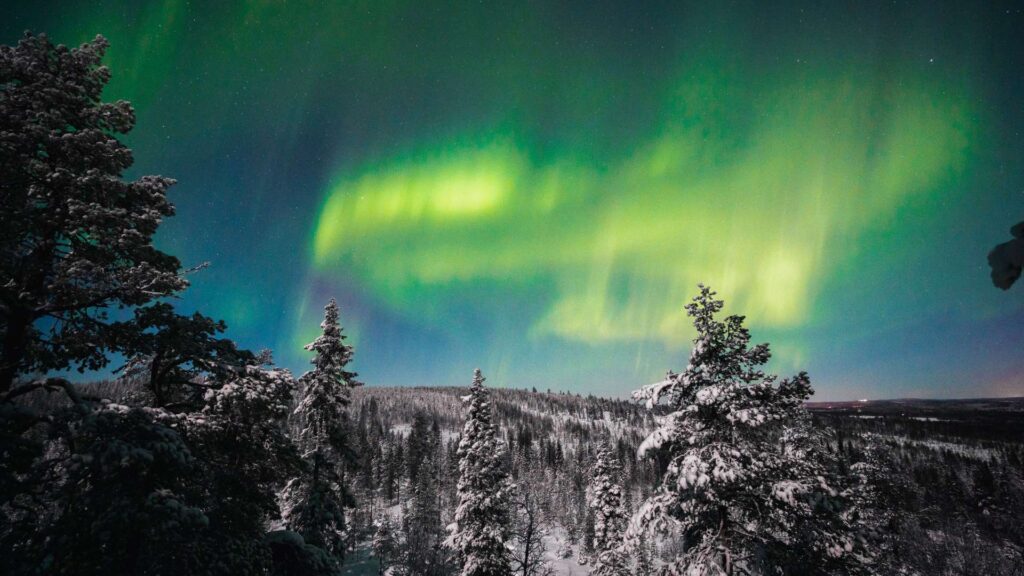
Planning a trip to Rovaniemi in 2026 places you right at the peak of the Solar Cycle. This “Solar Maximum” means the Northern Lights appear more frequently and with far greater intensity than usual. During this peak, the Aurora can dance even when geomagnetic activity is low—offering a near-daily chance of a sighting.
While the season runs from late August to early April, historical data suggests a few standout windows:
The Equinoxes (Autumn & Spring)
The periods around late September/October and March/April see the highest geomagnetic activity. Thanks to the “Russell-McPherron effect”—where the Earth’s magnetic field aligns perfectly with the solar wind—the likelihood of dramatic displays is at its highest.
March: The Sweet Spot
Many veteran aurora hunters consider March the ultimate month. The days are long enough to enjoy winter activities, yet the nights remain deep and dark. Most importantly, March statistically offers clearer skies compared to the cloud-heavy months of November and December.
How to Plan Your Stay for a Successful Sighting
Chasing the lights in the Arctic should be based on data, not luck. To maximize your chances, follow these “golden rules”:
- The 4-Night Rule: A minimum stay of four nights drastically improves your odds. Lapland’s weather is notoriously fickle; a longer stay ensures a single weather front won’t ruin your entire trip.
- Flexible Bookings: Opt for guided tours that offer free cancellation up to 24 hours before departure. This allows you to monitor cloud cover and only commit when the forecast looks promising.
- Multi-Day Passes: Some local outfitters offer “unlimited” chase passes. This is a cost-effective way to head out every night without paying for individual excursions each time.
Top Observation Spots in Rovaniemi
To see the Aurora properly, you must escape the city’s light pollution. If you have a car or don’t mind a brisk walk, these are the best local spots:
- Arctic Panorama Resort: This secluded retreat offers a front-row seat to the horizon, far from city light pollution. Its elevated, unobstructed views allow you to witness the Aurora in total silence, often directly from the comfort of a heated panoramic suite or private terrace.
- Ounasvaara Fell: Offers a wide-open horizon. While there are hotels nearby, walking just a few hundred meters into the forest will give you the darkness you need.
- Roke Hill (Korkalovaara): A hidden gem with a clear view to the north, often overlooked by the big tour groups.
- Lake Norvajärvi: Located 20km outside Rovaniemi. The frozen lake provides a stunning foreground for photography and zero light interference.
Data & Apps: What to Track
Stop staring out the window and start looking at the magnetometers. Download a reputable Aurora alert app and track these key metrics:
- Kp-Index: For Rovaniemi, a Kp 3 usually guarantees a show directly overhead. During the 2026 Solar Maximum, even a Kp 2 can produce vibrant results on camera.
- Solar Wind Parameters: Keep an eye on wind speed (aim for $400\text{ km/s}$ or higher) and the Bz value. If the Bz is “negative” (pointing south), the Earth’s magnetic shield “opens up,” allowing solar particles to pour in and create sudden, powerful outbursts.
Gear and Clothing: Surviving the Chill
With temperatures often dropping to -25°C, the wrong gear will cut your hunt short.
Thermal Layering
Merino wool is your best friend. Avoid cotton or cheap synthetics like acrylic; these trap moisture against your skin, causing you to catch a chill the moment you stop moving.
Protecting Your Tech
Extreme cold drains batteries instantly. Keep spare camera batteries and power banks in internal pockets close to your body heat.
Pro Tip: When returning indoors, leave your camera in its bag for at least an hour. This prevents condensation from forming inside the lens and electronics.
Photography Essentials
A sturdy tripod is non-negotiable. Even the latest smartphones require a multi-second exposure to capture the Aurora, and the Arctic wind is enough to ruin a handheld shot.