
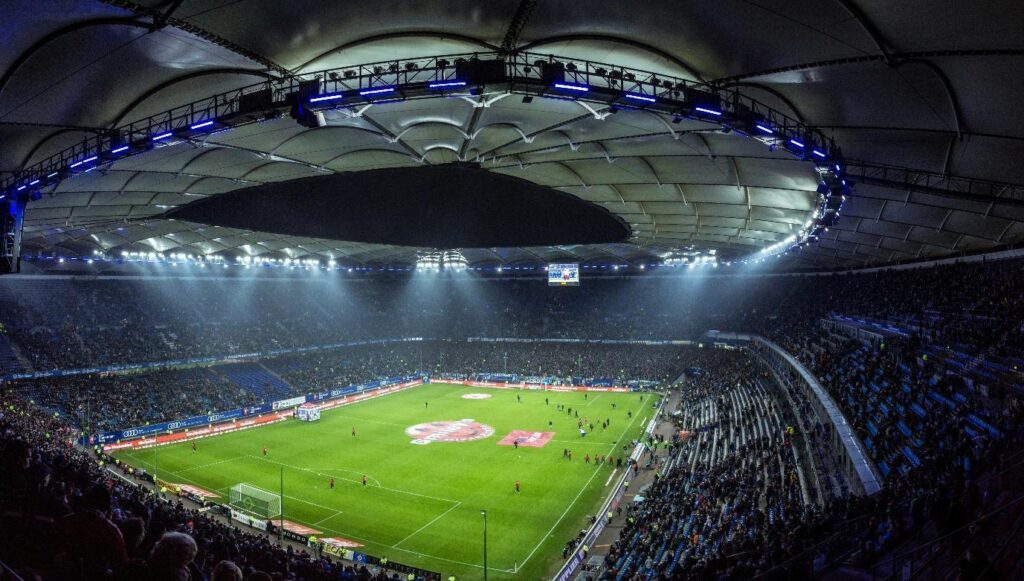
While the supreme importance of ability has always been the most moving element that drives association football results, any given match can present a flurry of potential outcomes. Naturally, the result is the final signifier, but it’s not the only one.
Instead, the way teams play football tells us quite a lot about what can happen going forward. Not all matches are elimination games, just like not every victory is a sign of success. The complexity of this sport rests on the importance of ambition.
Given that the ultimate outcomes depend quite a lot on a balance of factors that can be immediately important or significant over the course of a season, a proper analysis of this phenomenon can tell quite a lot about the way we perceive this sport.
As such, we will be looking at what exactly goes into football’s ultimate priority: winning matches and prevailing in top competitions at all levels. We will use a 3-point analytical method, discussing factors from a technical, mental, and overall contextual viewpoint.
This will provide a better look into what drives fan perception, media and public discourse, oddsmaking, and other perspectives on assessing football!
The idea of results versus actual performance and quality of football
They say that the winner takes it all. It applies in sports, where the victor is always enshrined in the annals of history, but also in the way people have gotten to the point of interacting with them, especially in something as complex as football.
We see this principle applies all across the board. Some are just watching for the sake of the sport, while others prefer to visit BetBrain because they find the balancing of odds crucial due to their propensity for betting.
Regardless of what one would seek from this sport, the existential question is what’s most important. Results matter the most for fans, teams, and commercial interests driven by outcomes. Style and flair are good for business, but irrelevant if the ensuing scores do not lead to success.
Overall, a good brand of football is generally vulnerable, but it must also be efficient to drive results. As such, much of fan perception depends on how the cookie crumbles and the end of a match or tournament.
Technical factors
We begin with what we decided to call technical factors because they’re the ones that are the easiest to assess, especially from an operational and eye-test standpoint. We can argue that, outside of the results themselves, they reflect quality the best.
Naturally, performance is something that requires nurturing and keen development, not just chasing numbers. This is why some of these details that may seem more important than others are, in fact, co-reliant.
Physical talent and skill
While trainable, one can be as fast, agile, and strong as their physical attributes allow them. And that’s to say that we’re not even talking about height, which is also important, especially with certain positions that may require a level of play style.
We see that, based on innate traits related to athletic performance, carrying a level of muscle and maintaining fitness is easier or harder for others. Nowadays, when the athleticism and stamina of a player are more important than ever, these factors are becoming increasingly important.
However, association football is different from other sports because it requires a level of skill that entails immense training, but also intelligence and creativity. These may be mental traits, which we’ll discuss separately, but they shine especially by skill, and decision-making is part of it as well.
In football matches, you simply see them player by player, and team by team. The value of any of the participants on the pitch is as high as their endurance. Being injury-prone negates much of a footballer’s talent if they can’t stay on the pitch.
Squad synergy and scouting
How many times have we seen contingents of hyper-talents not be able to impose their will because of various factors related to preparing for a match?

Well, it goes a long way when the opponent is ready, willing, and able. For this reason, knowing how the opponent tends to play, who needs special attention, and how to create a strategy can only happen through study via scouting.
If these aspects are to work well, they require the co-dependency of support provided by a real team, not just a collection of players. Creating helpfulness and synergy requires knowing the strengths and weaknesses of players, and you can see their connection in every match.
Tactical and strategic considerations
Knowledgeable football fans know that tactical approaches are not the end-all, be-all of it. Instead, it’s more about knowing when to be completely disciplined, when to adopt a fluid set-up, and how to always chase perfection in every pass, not to mention scoring opportunities.
It goes a long way. Things can start as early as when positioning meets versatility, creating a sense of multiple abilities within a system. It then graduates to understanding how to press, create passing lanes, and ensure that every strategic point fits the priorities required by the nature of the opposing team.
By the time a tactical approach reaches a formation, for example, roles, liberties, and improvisation margins are already well-known. That’s why we see the best teams run like well-oiled machines (the current PSG under Luis Enrique) that retain a sense of tactical fluidity while always feeling like they’re chasing the same ideal.
Contextual factors
Some results come from the fact that there’s nothing normal behind what’s actually going on. Players are humans who respond to their environment, just like any other living being. Some of them include some major aspects, such as the following:
Play atmosphere
Some stadia, such as the Westfalenstadion of Dortmund, Raiko Mitic in Belgrade, any of Istanbul’s major arenas, the Ibrox and Celtic Parks, but also both El Monumental and La Bombonera from Buenos Aires, are some of the most intimidating and legendary places to play football in.
As a result, the pressure will always be stronger than usual here, and the noise can hinder communication pitch-side. If the match happens in a stadium renowned for its hostility, it’s time to think about what can go wrong for any visiting team.
Weather and pitch quality
Do you remember the issues caused by the heat of Arena da Amazonia at the 2014 World Cup? How about the harrowing cold of playing in northern Europe?
If the grass gets slippery because of rain, you don’t see the same type of dribbles and ball control that you’d expect under certain circumstances. Sure, retractable roofs and domes are more popular than they’ve used to be, but still.
The history of football has seen plenty of incredible circumstances caused by these aspects. The Miracle of Bern, probably the biggest upset in football history, may not have happened if not for the difference caused by the rain of that day, coupled with West Germany’s studded boots.
 This will be the shortest entry here because, quite frankly, it’s a ubiquitous argument that everybody knows very well.
More games mean more match-day, commercial, broadcasting, and gambling-related revenue streams. You add as many as possible across all competitions, domestic or European, and you have as much money as possible that you can generate in any given season.
The result? A congested yearly schedule leads to an increasing number of injuries, fatigue, and pressure from players. These lead to unpredictability, especially at the end of any given season.
Psychological factors
There will always be moments of high leverage that require a certain level of mental resources from teams and players, regardless of their status. What exactly goes into it?
Mentality and team culture
The famous mentality monsters that we’ve heard in the last decade show that getting things done under duress is as important as possible. If a team that played modestly and the entire game can overcome its stagnation and strike a dagger at the very best moment, then the ensuing result can bear the brunt of it.
So, what exactly does there need to be? Some rely on the siege mentality, creating a sense of hostility felt by everyone and from anyone, especially when there’s a strong group connection.
For an appropriate, powerful, and efficient answer to circumstances to prevail, there needs to be a unitedness that surpasses the naturalness of emotions. However, this mentality is something to build and instill, with results turning up gradually.
Pressure and motivation
Some crack under pressure, while others thrive in it. That’s the nature of psychological responses in key moments, and the biggest matches of the world of football generally require swift reaction and undeniable concentration.
Even when the tips of value and prestige are scaled toward the opponents, a team can tap into a sense of motivation that, given the stakes, pops up for the sake of pride and the weight of the result.
That heavy burden can make some falter, but those with the heart of a champion come out on top. Cool is the crown of ice, and so is the silverware that it can bring!
Rivalry and personal disputes
Some players and teams simply do not liek each other. This factor has generally slowed down in recent times because of the camaraderie and availability of players from other media. Historically, such aspects also came from national team connections.
However, in spite of personal connections of any kind, a rivalry is still very valuable. The badge on one’s shirt represents hostility toward certain clubs or countries, and that means letting football do the talking, even if it surpasses the line of clear play.
Moreover, you also have personal rivalries and, at times, feuds. We have the Ronaldo-Messi rivalry, which has marked this sport for the better part of two decades, and that has been a big sentiment that has influenced how each of their teams played when they met each other. It just so happens that their then-clubs’ rivalry is arguably the biggest in sport.
When such clashes can finally find their time to shine on the pitch, the general rules of playing these games tend to be somewhat dimmed.
Conclusion
These are just some of the aspects that we can add to the formula of how football match results tend to come. Given that this is a bit of a simple list if you think about the variables that go into each game, we can see that this is a complex affair.
What’s most important is that everybody recognizes the value and beauty of the sport, regardless of the way they interact with it. If you choose to do so via betting, please do so responsibly!