
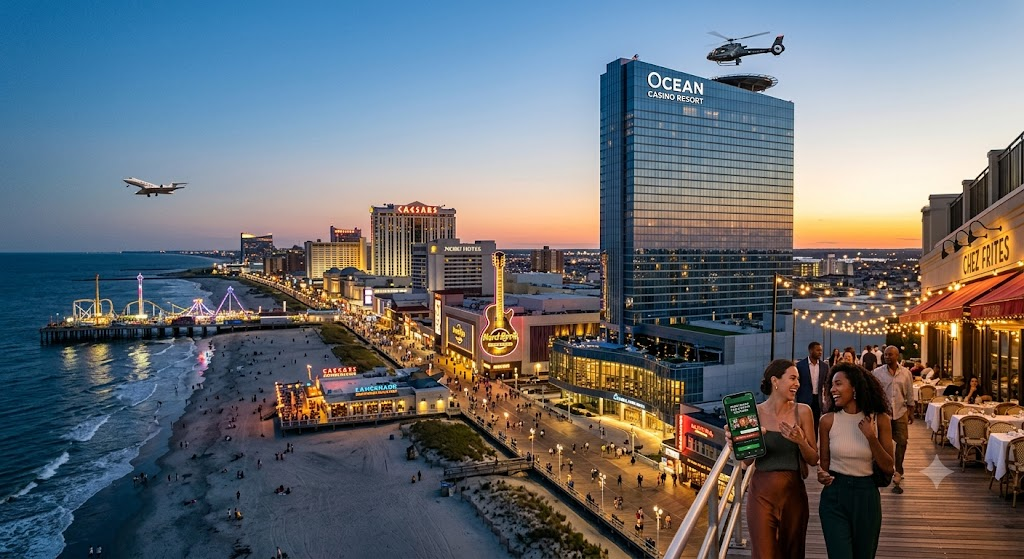
Sink or Swim: The Billion-Dollar Reality Check of 2026
Let’s be real. Atlantic City faced two distinct choices a few years ago: reinvent itself entirely or get eaten alive by new gaming markets aggressively expanding across New York, Maryland, and Virginia. The casino executives chose to spend their way out of the corner. Hundreds of millions of dollars flooded the Boardwalk over the last 24 months to fund a desperate, highly calculated pivot toward the integrated luxury resort model. Today, non-gaming revenue—think high-margin steaks, VIP beach cabanas, and boutique suites—makes up roughly half the cash flowing through the city’s premier properties. You can see the shift immediately. The old business model relied entirely on keeping bodies glued to slot machines for hours on end; that strategy is dead. Now, operators are building holistic, inescapable ecosystems to capture a younger, wealthier demographic before they even cross the city limits.
The financial data backs this up with brutal clarity. While the nine brick-and-mortar properties saw collective operating profits dip slightly in Q2 2026 due to inflation and soaring labor costs, July’s gaming revenue hit a staggering $304.2 million. The operators who figured out how to balance these rising costs with high-margin luxury—specifically Ocean Casino Resort and Caesars—were the only ones to actually grow their operating profits year-over-year.
Bypassing the Parkway: Helicopters, IV Drips, and the New Room Key
Traffic on the Garden State Parkway has always been a logistical nightmare for high-net-worth players. The ocean essentially nuked that friction from orbit this year. Executives decided to just buy their own private jets; they also inked a deal with Blade to shuttle heavy hitters from Manhattan to a rooftop helipad in roughly forty minutes. Frankly, the actual hotel rooms had to match that level of logistical flex. Ocean dropped $50 million gutting and rebuilding 559 rooms. They even threw in concierge in-room IV drips—branded as ShoreShot IV—to cater specifically to the morning-after crowd who want to recover without leaving their suites.
Caesars took a wildly different approach by handing over the top three floors of the Centurion Tower to Nobu. The goal was to build a minimalist, Japanese-style fortress for loyalists who want the casino action nearby—just without the blinding slot machine glare. Borgata saw this happening and immediately countered by sinking $55 million into the Water Club, rebranding it as the MGM Tower to protect their Marina District turf. Tropicana, meanwhile, had to quietly gut its Solana Tower just to stay relevant in this brutal modernization race. Even the Golden Nugget finally woke up. Management poured cash into massive suite renovations and bolted EV chargers to the concrete to court the eco-conscious affluent crowd. The reality is simple. The hotel bed is no longer a complimentary afterthought for heavy gamblers; it is the primary financial hook.
The Death of the Comped Buffet and the Tableside Flex
Food drives foot traffic. You cannot argue with this math today. Stephen Starr saw a massive void in high-end Boardwalk dining and ruthlessly filled it at Ocean. His team built a Parisian brasserie called Chez Frites—a spot that literally weaponizes a Thursday-to-Monday happy hour just to pull the early evening foot traffic into a very chic, rattan-backed dining room. Upstairs, Sunny’s corners the lucrative breakfast market with decadent Nutella pancakes served eleven stories above the surf.
Look closer and you will notice a bizarre arms race in tableside theatrics across the city. Off-boardwalk legends like Cafe 2825 still require reservations weeks in advance just to watch Joe Lautato hand-stretch fresh mozzarella right at your elbow. Golden Nugget’s Chart House is currently torching applewood for $27 Manhattans and pulling espresso martini soufflés out of thin air to drive high-margin beverage sales. Down in the Orange Loop, The Iron Room hides brilliantly behind a chocolate bar, pushing Oaxacan meatballs and micro-whiskeys to an urban exploration crowd.
Hard Rock actually went the other way. They built a localized fast-casual fortress with Michael Solomonov’s Federal Donuts to capture rapid, low-friction spending from a younger demographic. Property operators also turned their Fresh Harvest Buffet into a strategic loss-leader. Management is heavily discounting prime Saturday seafood for veterans and concert-goers just to keep bodies circulating inside the building.
Sand, Holograms, and Monetizing the Atlantic
You cannot just offer a dark room with baccarat tables anymore. The modern playbook requires high-engagement daylight attractions. Ocean’s 18 Mini Golf isn’t just passive putting; a 12-foot HYPERVSN holographic Great White shark hovers over the bar while corporate groups drink craft cocktails between holes. The showboat threw a massive structure over the Island Waterpark to beat the unpredictable coastal weather. The developers smartly bolted on an adults-only Bliss Pool so parents can buy premium drinks while the kids hit the slides.
Resorts Casino Hotel looked at a recent winter beach replenishment project and saw a wide-open wallet. They dragged the LandShark Bar & Grill right onto the sand. Now, VIP cabanas, firepits, and a massive Margaritaville deck siphon off tourists who want premium bottle service directly in the surf. This experiential micro-economy bleeds into the actual city grid as well. The historic Atlantic City Aquarium finally reopened in Gardner’s Basin, while developers are busy throwing container parks into the Orange Loop. Brand new luxury townhomes with rooftop decks are popping up for affluent families who refuse to sleep inside a mega-resort. The opening of The Seahaus Hotel—a Marriott Tribute property right on the water—proves that off-casino boutique lodging is finally a viable, profitable bet.
Why Vegas-Style Residencies Tanked on the Boardwalk
The catch? Not every Las Vegas import survives the Atlantic Ocean wind. Caesars spent $40 million meticulously resurrecting the 1929 Warner Theatre for The Hook. The producers behind Absinthe rolled out a raunchy, hyper-expensive acrobatic spectacle they assumed would run all year. The whole thing collapsed and shuttered for good by September.
The math simply did not work. Vegas stays afloat on an endless, rotating conveyor belt of global convention traffic—like the 150,000 attendees at CES—that guarantees fresh ticket buyers every single night, even in the dead of winter. Atlantic City lives and dies by a seasonal drive-market radius spanning from Philadelphia up to North Jersey. Locals will pay $108 once for a spectacular aerialist show; they won’t pay it twice to see the exact same contortionist. This massive miscalculation forced a hard pivot back to what actually prints money on the coast. Operators are leaning entirely on rotational weekend headliners, A-list comedy tours, and high-energy EDM residencies at venues like HQ2 Beachclub. You rent the crowd for the weekend; you don’t try to move them in permanently.
The Invisible Casino Floor and the Final Payout
While the physical properties wage literal turf wars over beachfront cabanas and steak frites, the most profitable real estate in 2026 is completely invisible. Modern luxury travelers demand absolute optionality. Someone paying for cabana bottle service at the Bliss Pool—or hiding out in a custom Nobu suite—usually has zero desire to walk downstairs to a sweaty, packed felt table. These players just pull out their phones and tap into reputable online casino platforms to chase a blackjack run or spin a digital roulette wheel from the comfort of their sun loungers.
The integration is flawless. Platforms like DraftKings operate directly under local resort licenses, offering live dealers and exclusive slots to anyone physically inside New Jersey state lines. This digital ecosystem pulls in billions of dollars annually—surpassing brick-and-mortar revenues statewide—without the massive overhead of air conditioning a 100,000-square-foot room or paying floor staff.
The physical city is finally catching up to this level of digital and luxury sophistication. Pacific Avenue has synchronized traffic lights now to alleviate Sunday congestion. Massive DSD Renewables solar canopies cover the Caesars parking decks, quietly offsetting 6% of the property’s grid energy and ticking corporate sustainability boxes. Atlantic City figured out its survival equation. The era of cheap comps and sad, smoke-filled slot rows is a ghost. The future belongs exclusively to the operators who understand that the real gamble isn’t on the table; it’s whether you can keep a high-net-worth traveler seamlessly entertained from the moment their helicopter lands until they pay the final bill.