Few countries pack as much variety into a single drive as Morocco. In the space of a few hours you can leave a palm-fringed city, climb a snow-dusted mountain pass, and descend into a landscape of red gorges and desert plateaus. Well-maintained national roads connect the imperial cities, while quieter mountain routes reward those willing to take the long way round. For travellers who like their scenery to change by the hour, Morocco is one of the most rewarding places in the world to get behind the wheel.
The High Atlas: Tizi n’Tichka
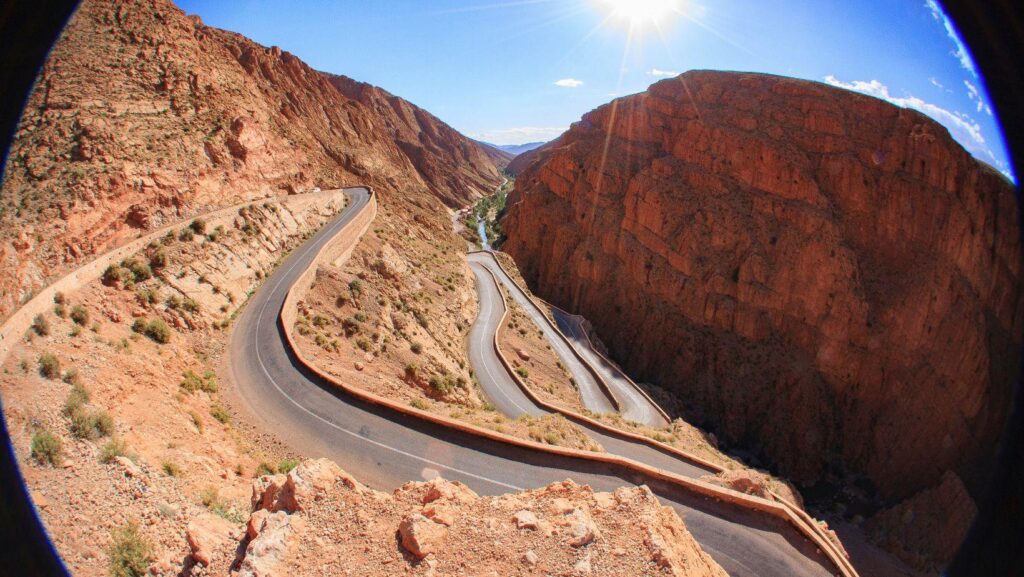
The classic Moroccan road trip crosses the High Atlas on the Tizi n’Tichka, the highest major pass in the country at around 2,260 metres. The route links Marrakech with Ouarzazate and the gateway to the Sahara, winding through Berber villages, argan groves and dozens of tight switchbacks. Recently widened, it is far safer than it once was, but fog, livestock and slow trucks still demand a careful hand. Pull over at the marked viewpoints for panoramas that stretch for miles across the ranges.
Kasbahs and canyons
East of the mountains, the Road of a Thousand Kasbahs threads through the Dades and Todra gorges, past fortified mudbrick villages that seem to grow out of the rock. The Dades’ stacked hairpins, nicknamed the “monkey fingers”, are a favourite of photographers, while the Todra Gorge road runs along a canyon floor beneath cliffs more than 300 metres high. It is slower going, but every bend frames a new picture and a new shade of ochre and rose.
To the Atlantic coast
Head west instead and the landscape softens towards the sea. The drive from Marrakech to Essaouira crosses rolling argan country, where goats perch improbably in the trees, before arriving at a breezy, whitewashed port town beloved by windsurfers and artists. Further south, the coastal road towards Agadir and the surf village of Taghazout links some of the country’s finest beaches, with plenty of places to stop for fresh grilled fish along the way.
Practical tips for driving in Morocco
Roads between the major cities are good, but fuel stations thin out in the mountains and the desert, so fill up whenever you can. Carry water, an offline map and small cash for tolls and tips. Drive slowly through villages, avoid the mountain passes after dark, and check the forecast in winter, when snow can close the highest routes. An international driving permit is recommended alongside your national licence, and a smaller car makes the tight medina streets far easier to manage.
Let a local handle the logistics
Self-driving is rewarding, but many travellers prefer to sit back and enjoy the view while someone else manages the hairpins and the parking. Guided day trips and multi-day tours run from the main cities with experienced local drivers who know every bend, and you can plan a Marrakech road trip with MaJourneys, which arranges the transport, guides and stops along the way and confirms everything with the local provider before you set off, with payment made on the day rather than online.
When to go
Spring and autumn offer the most comfortable driving conditions, with mild days and clear skies. Summer is hot on the plains but pleasant at altitude, while winter brings snow to the passes and a quieter, more atmospheric feel to the desert and gorges. Whatever the season, set off early to enjoy the soft morning light and the empty roads before the heat and the coaches arrive.
Where to base yourself
Most road trips begin in Marrakech, the natural hub for the High Atlas, the Agafay Desert and the coast, with the widest choice of car hire and guides. Fez and Ouarzazate make good alternative starting points for the north and the south, so you can shape the route around the landscapes you most want to see.