
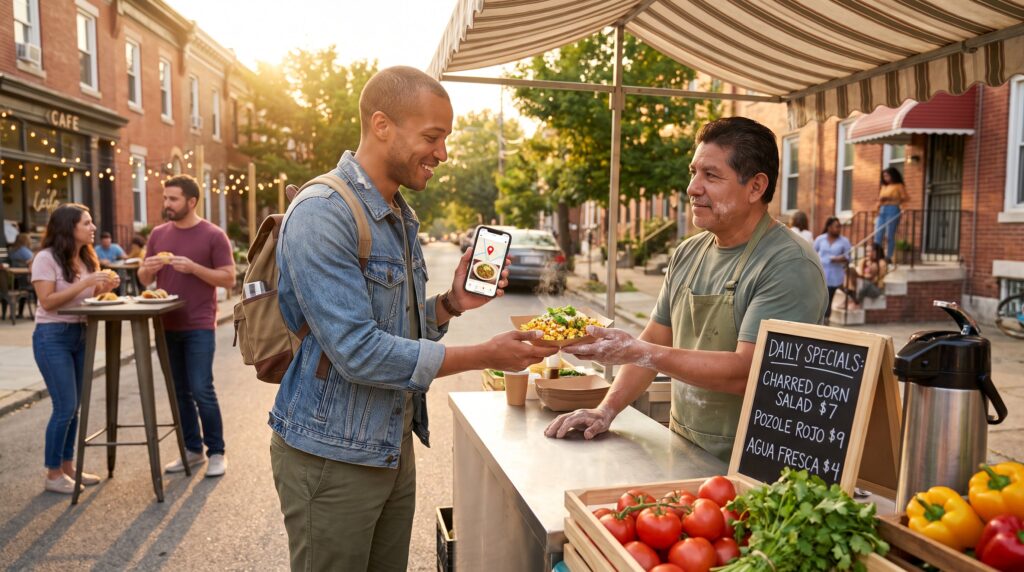
How to find local food experiences while traveling starts with intention: travelers who seek meals in neighborhood markets, family-run eateries, and home-hosted dinners get richer cultural insight and better food than those who stick to tourist strips. This guide explains why food-focused exploration changes a trip, how to research before departure, and precise on-the-ground tactics that lead to authentic meals. It assumes readers want practical, repeatable steps they can use on short city breaks or month-long trips.
Key Takeaways
- Seeking local food experiences transforms your trip by connecting you to a place’s culture, history, and daily life through authentic meals.
- Research before traveling—using local food blogs, mapping residential neighborhoods, and checking recent social media posts—helps you find true local dining spots beyond tourist areas.
- On the ground, walk into residential areas, observe menus in the local language, ask professionals like vendors or bartenders, and sample foods at markets to discover authentic flavors.
- Booking local food tours or cooking classes in advance can provide exclusive access to neighborhood eateries and deeper cultural insights.
- Practice basic food safety, respect local etiquette, and prepare key food phrases to ensure enjoyable and safe dining experiences while traveling.
Why Seeking Local Food Experiences Transforms Your Trip
Fact: Eating where residents eat changes what a traveler learns about a place. When someone chooses neighborhood stalls over landmark restaurants, they meet local suppliers, taste seasonal ingredients, and learn a city’s daily rhythm.
Discovery: In Porto, for example, a stall selling caldo verde at 7 a.m. signals a working-class morning culture: in Kyoto, a tiny izakaya packed with salarymen shows evening neighborhood life. These moments give specific context, times, smells, and social patterns, rather than abstract facts about cuisine.
Why it matters: Food reveals history and ecology. A single dish can show trade routes (spices), migration (techniques), and local agriculture (which vegetables are fresh). Travelers who taste local specialties often remember the place by that flavor: smoked fish on a Baltic quay, a chile paste in Oaxaca, or a coriander-heavy salad in Beirut.
Value and authenticity: Local places usually cost less and serve dishes prepared the same way locals prefer. Authentic meals come with social currency, small talk with a vendor, a recipe tip from a cook. That connection often leads to other invitations: a neighborhood festival, an informal cooking class, or a home dinner.
Warning: Authentic does not always mean safe. Travelers should watch basic hygiene, ask about ingredients if they have allergies, and use common-sense food safety. Seeking local food transforms a trip by adding sensory detail, human connection, and an immediate sense of place.
How To Research, Plan And Prepare Before You Go
Answer: A short, focused research routine before departure increases the odds of authentic meals. Start with three tasks: read local food writing, map residential neighborhoods, and scan recent social posts.
Read local sources: Local food blogs and destination guides reveal names of markets, family restaurants, and seasonal events. For a primer on broader planning methods, consult a compact travel planning hub that lists destination resources and trip ideas from a single place to get oriented. Use that overview early to avoid chasing only famous spots.
Map neighborhoods: On a map, mark tourist loci, then draw a one-kilometer ring beyond them. That ring usually contains residential streets with cafes and small eateries. Identify at least two markets and one neighborhood restaurant in that zone, write down names and addresses. The resource guide covers this in more detail for anyone who wants to go deeper.
Social reconnaissance: Search hashtags and recent posts for the last six months to spot active venues. Screenshots of menu items, photos of crowds, and timestamped posts reveal what locals actually eat now, not what a guidebook described years ago.
Book limited activities: If a cooking class, food tour, or small festival requires reservations, book early. Popular local experiences can sell out: the research routine above helps prioritize which to reserve.
Practical prep: Learn key food phrases, note dietary restrictions in the local language, and copy addresses to your phone for quick directions. This preparation turns curiosity into efficient, on-the-ground action.
Links for planning: For mindful dining that matches a slower travel pace, readers can find useful contextual advice about deliberate meals in a short guide on slow travel approaches.
On-The-Ground Tactics To Discover Authentic Eats And Food Events
Answer: Walk, observe, ask, and sample, then repeat. Those four moves reliably locate authentic food.
Walk away from sights: Walk three to five blocks away from main attractions toward residential streets. Busy cafés at 10 a.m. or packed noodle houses at 1 p.m. are strong signals that locals eat there. In many cities, the best bakeries and lunch counters sit a short stroll from tourist hubs.
Observe menus and language: Look for short, focused menus in the local language and prices that match neighborhood incomes. A tiny menu with daily specials often means the kitchen makes fresh, local dishes rather than tourist-friendly versions.
Ask local professionals: Hotel concierges and hostel hosts help, but ask street-level professionals too, market vendors, bartenders, shopkeepers. A bartender might say where they get their breakfast: a vendor will name the stall they visit on Sundays. For safe social approaches when meeting strangers, follow the guidance in a practical how-to on connecting with locals.
Use markets strategically: Visit markets at peak local times, early morning for produce and late afternoon for prepared foods. Taste small items: a single skewered snack or one dumpling gives information about texture, spice, and portion size without overcommitting money or calories.
Join guided experiences selectively: An experienced local food tour can shortcut discovery of neighborhoods, producers, and home dining hosts. Food tours often introduce backstreet vendors that aren’t easy to find alone. For a perspective on why tours help travelers access neighborhoods and producers, recent writing explains how curated tours connect visitors to local food systems.
Safety and etiquette: Respect queuing norms, ask before photographing people or food, and offer praise in simple local phrases. If dietary needs are strict, check ingredients before ordering. These small behaviors open doors to better meals and invitations to family-run places.
Conclusion
Insight: Combining targeted pre-trip research, neighborhood exploration, and local advice yields the most authentic food experiences. Travelers who prepare key phrases, identify residential markets, and ask market vendors or bartenders tend to eat better and connect deeper with place. A practical next step is to save a short list of neighborhood spots and one market per destination before departure, then let curiosity guide the rest of the meal.