
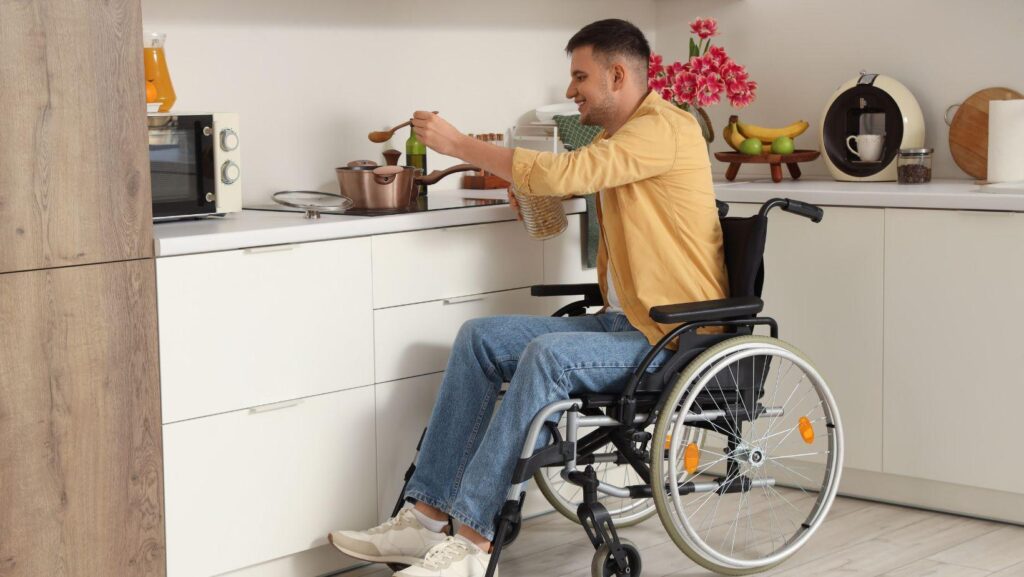
Why the Kitchen Becomes a Barrier for Wheelchair Users
For many people who use a wheelchair or have limited mobility, the kitchen is one of the hardest rooms in the house to navigate. Counters are often too high, cabinets sit out of reach, and the tight turning space between the stove and the sink can make even simple tasks feel exhausting. Choosing the right kitchen chairs for people with disabilities can change that experience entirely, turning a frustrating space into one where cooking feels manageable again.
Standard kitchens were rarely designed with mobility challenges in mind. Cabinets, appliances, and worktops are usually built for someone standing at an average height, which leaves wheelchair users constantly stretching, twisting, or asking for help with tasks that should be simple.
Over time, this can chip away at a person’s sense of independence. Cooking a meal is not just a practical task, it is also tied to routine, identity, and the ability to care for oneself and others. When the kitchen becomes inaccessible, many people quietly give up activities they used to enjoy, from baking with grandchildren to hosting a simple dinner.
The good news is that the solution rarely requires tearing out the entire kitchen. In many cases, the right seating and a few thoughtful adjustments can restore access to the space without months of construction or a completely new layout.
Rethinking Kitchen Design Without Full Renovations
A common assumption is that making a kitchen accessible means lowering every countertop, widening every doorway, and replacing cabinets from top to bottom. This kind of renovation is expensive, disruptive, and not realistic for every household, especially in rented homes or older buildings where structural changes are limited.
This is exactly where specialised seating solutions come into play. Brands such as VELA have built their entire product line around this exact problem, focusing on chairs with a compact width that can move easily through narrow kitchen layouts instead of requiring the kitchen itself to change shape. Rather than adapting the room to the person, the idea is to adapt the seat so it fits into a completely ordinary kitchen.
A chair that rolls smoothly across the floor, locks securely in place, and adjusts in height at the push of a button can effectively bring the counter, the stove, and the sink within reach without a single wall being moved. This kind of approach tends to be far more affordable than a full renovation, since it works with the existing layout instead of against it.
For many households, this reframes the entire question. Instead of asking how much it costs to rebuild a kitchen, the more useful question becomes how a single, well chosen piece of equipment can unlock a space that already exists.
Small Adjustments That Bring Back Independence
Beyond seating, there are several smaller changes that make a noticeable difference in daily kitchen life. None of them require major construction, and most can be introduced gradually as needs change over time.
Some practical starting points include:
These adjustments work best when they are combined with the right seating, since mobility and reach are closely connected. A person who can move comfortably between the stove, the counter, and the sink is far more likely to stay engaged in cooking rather than avoiding it altogether.
Ultimately, accessibility in the kitchen is rarely about one dramatic change. It is usually the combination of a few practical decisions, from storage habits to the right chair, that turns a room full of obstacles into a space where cooking feels natural again. For many families, that shift also brings back something less tangible but just as important, the simple pleasure of preparing a meal together.