
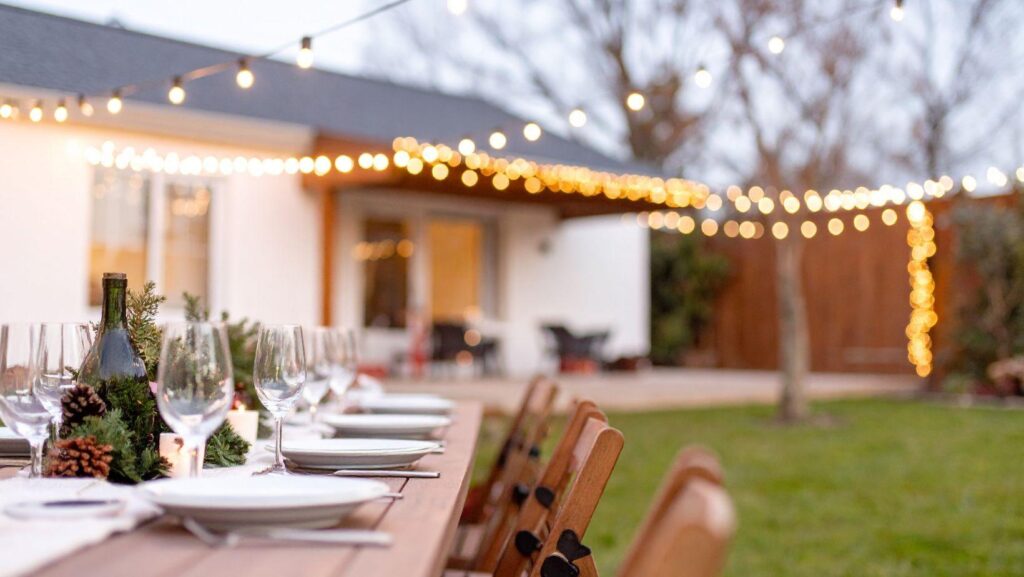
Outdoor gatherings usually depend on a backyard that can accommodate cooking, seating and movement. The difficulty is that most residential spaces are arranged for quiet use rather than for a group of visitors, so equipment, furniture and walking routes compete for the same ground. A considered layout allows hosts to manage heat, smoke, traffic plus storage without rearranging the property for every event. By treating the yard as a set of connected zones rather than a single open area, property owners can support comfortable gatherings throughout the warmer months.
Assess The Available Space
The condition of a yard determines how much of it can be used for a gathering. Property owners are encouraged to examine ground level, drainage, shade and proximity to the residence before they commit to a fixed arrangement. Uneven surfaces are unsuitable for tables or heavy equipment, and low areas that hold water after rain generally remain damp long after the surrounding ground has dried. A short survey of these conditions helps establish which portions of the space are genuinely usable.
Additionally, the distance between the cooking area and the residence affects how the space functions during an event. A location that sits far from the kitchen requires more carrying of plates, utensils as well as supplies, while a location placed too close can direct smoke toward windows and doors. The placement of the cooking zone is therefore a compromise between convenience and ventilation – this approach prevents the most common frustrations of an outdoor meal.
Select Suitable Cooking Equipment
Cooking equipment is the element that shapes the rest of the layout, because it requires clearance, a stable surface and a predictable position. Property owners generally consider fuel type, footprint, storage requirements and the number of people they expect to serve. Equipment that suits occasional use for a small household is often inadequate for regular gatherings of visitors. A realistic estimate of frequency is more useful than a decision based on appearance alone.
Fuel type is the distinction that most often separates one category of equipment from another, and each option carries its own demands on time and attention. Hosts who prefer charcoal grills can plan for longer preparation and a dedicated area for fuel storage – those who choose gas grills may weigh faster startup against the need for a supply connection. Neither arrangement is inherently better, so the decision typically depends on how the space is likely to be used across a season.
Arrange Seating And Movement
Seating arrangements are more effective when they follow the natural paths that visitors take through a yard. Groups tend to gather near food, drinks and shade, which means chairs placed far from those points are often left unused. Movement lanes between the cooking area, the seating and the entrance to the residence should remain clear so that visitors are not passing behind hot equipment. Furniture that can be relocated easily allows the arrangement to adapt as the size of a group changes.
At the same time, illumination and surfaces deserve attention as an evening progresses. Low level lighting along paths and near steps helps occupants move safely once daylight fades, while a table or counter close to the cooking area gives hosts somewhere to rest platters and tools. Additions of this kind are usually modest in cost but they materially change how long a gathering remains comfortable outdoors.
Maintain Safety And Upkeep
Outdoor cooking areas require ongoing attention because heat, grease and weather all act on the same surfaces. Property owners are responsible for keeping combustible materials away from cooking equipment, checking that surfaces remain stable plus confirming that covers and connections are intact before use. Connections that carry fuel are best examined by a qualified technician rather than adjusted without relevant experience. Debris that collects beneath equipment over a long season can create both a fire risk and an unpleasant smell.
Furthermore, outdoor appliances benefit from protection when they are not in use, and manufacturers typically publish cleaning and maintenance guidance for equipment of this kind. In particular, cooking appliances that remain exposed to weather, such as grills, hold up better when they are covered, cleaned after use and stored away from standing water – this practice extends the working life of the hardware.
Conclusion
A backyard that works for gatherings is generally the result of planning rather than the amount of space available. Assessment of the site, selection of cooking equipment, arrangement of seating and movement but also ongoing maintenance are the considerations that shape a usable outdoor area. By treating the yard as a working environment with defined zones, property owners can host gatherings with less effort and fewer interruptions.