
A carry-on that fits under an airplane seat forces decisions most people never have to make. Which sweater earns its space? Which charger cable is worth carrying? Which “just in case” item finally gets left behind? People who spend much of the year in transit, flying between cities for work or relocating every year or two, tend to describe the same shift in thinking. What frequent travelers learn about living with less rarely starts as a philosophy. It starts as a packing habit, and that habit slowly spreads into closets, kitchens, and storage units back home. The change is rarely dramatic, but it is consistent, showing up trip after trip until fewer possessions simply feel normal.
Why Frequent Movers Learn to Travel Light
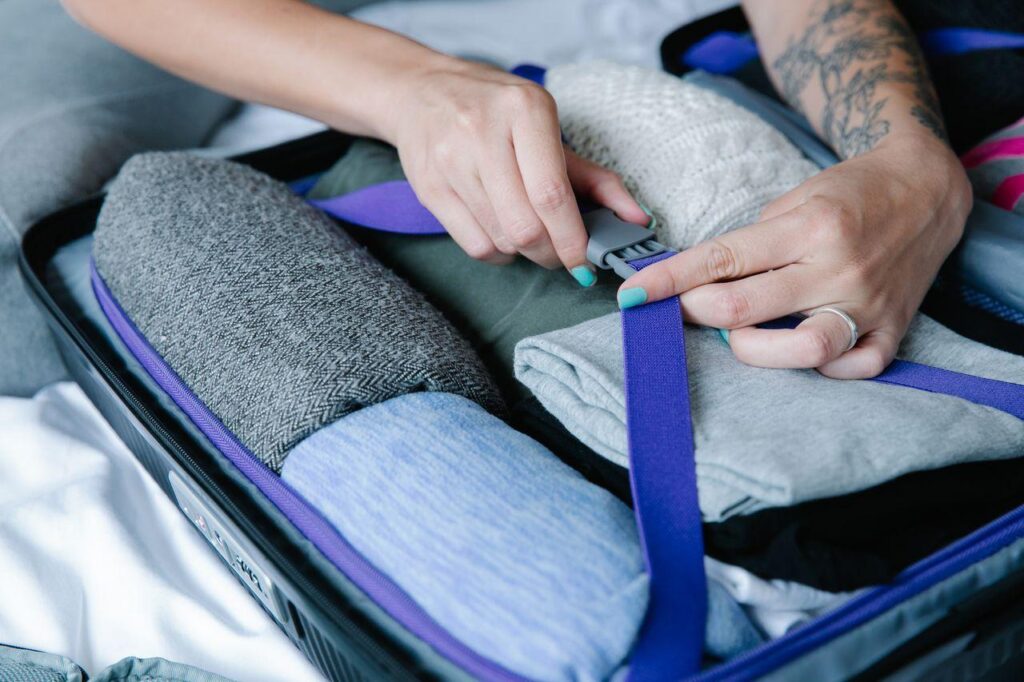
Frequent travelers rarely start out as minimalists. The shift happens gradually, one overweight suitcase at a time, until packing becomes an editing exercise instead of an afterthought. After a few trips, most people notice which items they actually reach for and which ones simply added weight. Rolling clothes instead of folding them, decanting toiletries into smaller containers, and choosing versatile pieces over single-occasion outfits are small habits, and they add up fast over a year of travel. Someone flying between Chicago and Austin twice a month, for example, quickly learns which jacket works for both climates.
Packing lighter also becomes easier when travelers account for mastering cultural nuances while traveling abroad, since clothing, etiquette, local customs, and practical expectations can all influence what is genuinely useful at a destination. The goal gradually shifts from packing for every possible scenario to carrying only what the trip is actually likely to require.
How Do You Decide What Stays When You Move Again?
Deciding what stays usually comes down to one question: has this been used in the last few months? For people who relocate frequently, not just travel, this question repeats every time a lease ends. Closets fill up between moves with things that seemed important once. Extra kitchenware, out-of-season coats, and boxes never fully unpacked from the last address are common culprits.
A looming move is often the push people need to finally get rid of unwanted stuff by donating, selling, recycling, or discarding things that are no longer worth transporting to another address. A simple keep, donate, sell, and trash system speeds the whole process up considerably, especially when a mover is already arriving in a few weeks.
What Does Living With Less Actually Look Like?
Living with less usually looks less dramatic than people expect. It tends to mean fewer duplicates, a smaller wardrobe rotation, and one well-chosen tool instead of three half-used ones. In practice, this shows up in a few recognizable categories:
- A capsule wardrobe built around three or four base colors
- One multipurpose device instead of separate cameras, e-readers, and game consoles
- A single set of travel-sized toiletries refilled between trips
- A short list of sentimental items kept in one small box, not several
For location-independent workers, survival tips for the location-fluid lifestyle often revolve around exactly this kind of simplicity: fewer possessions to manage, portable routines, and belongings chosen because they work across different homes and destinations. Over time, owning fewer things may stop feeling like sacrifice and start feeling like removing friction from everyday decisions, one drawer or duffel bag at a time.
How Does Technology Support a Minimalist Travel Style?
Technology tends to replace physical items rather than add to the pile. An e-reader stands in for a shelf of paperbacks. A translation app replaces both a phrasebook and a pocket dictionary. Cloud storage removes the need to carry printed documents at all. Frequent travelers are increasingly using tech to simplify every step of travel, from checking destination weather before packing to keeping tickets, maps, reservations, and packing lists on a single device. The fewer physical backups a trip requires, the lighter the actual bag ends up being by the time boarding starts.
What Does Research Say About Owning Less?
Researchers studying minimalism have linked reduced consumption and clutter to a stronger sense of personal fulfilment and overall well-being. Research into the antecedents of minimalism and its impact on well-being has associated decluttering with freeing up physical space and time that can instead go toward relationships and personal interests. For frequent travelers, this tracks with lived experience. Less time spent managing possessions usually means more time available for the trip itself. Lower-consumption lifestyles can also reduce waste, adding an environmental incentive to the personal one.
What Should You Know Before Packing for Your Next Trip?
Airport security rules shape more minimalist packing decisions than most travelers realize, from liquid limits to restrictions on what can travel in a carry-on. Checking the TSA’s guidance on what travelers can bring before packing makes it easier to decide which items belong in hand luggage, which need to be checked, and which should stay home altogether. Building a packing list around those limits rather than dealing with them after a bag gets flagged can save time at nearly every airport. Most experienced travelers eventually become so familiar with the restrictions that checking them becomes a formality rather than a necessity. That familiarity is itself a byproduct of living with less: fewer items mean fewer surprises at the checkpoint.
The Lighter Life That Follows
What frequent travelers learn about living with less rarely stays confined to a suitcase. The same instinct to question every item, whether it is worth carrying, storing, or moving again, eventually reshapes closets, storage units, and entire homes. For someone who travels constantly or relocates every year or two, that shift can turn a stressful packing day into a fairly routine one. Anyone preparing for a move or a long trip can start small. Pick one category, decide what is genuinely worth keeping, and let the rest go before the next flight or moving truck arrives.